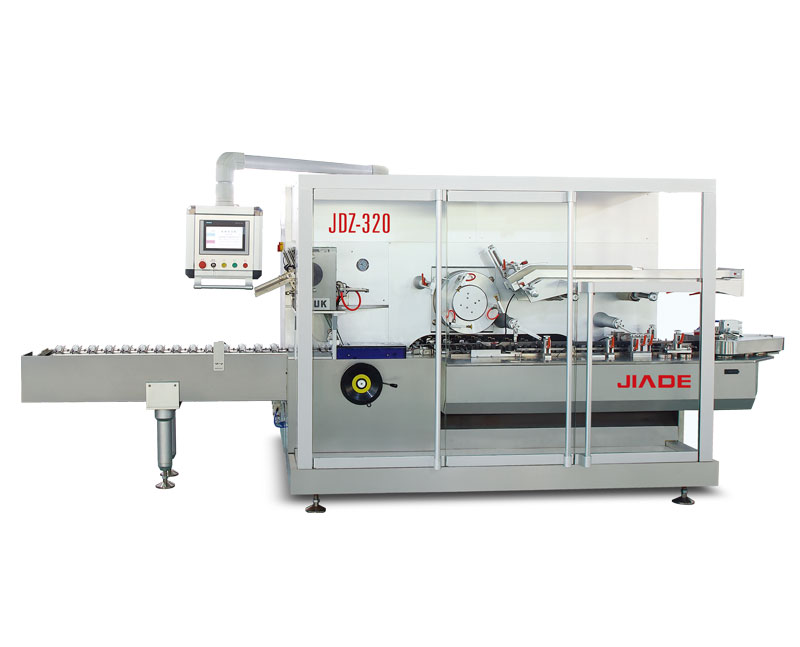

How to pick an automatic cartoning machine for pharmaceutical lines
A pharmaceutical packaging manager once framed the challenge this way: “The cartoning machine we bought for our nutraceutical line works fine. But the one we need for our new pharma line has to meet a completely different set of expectations. Validation documentation, cleanroom compatibility, serialization integration, and audit trails—none of these were priorities before. Now they are deal-breakers.” Picking an automatic cartoning machine for pharmaceutical applications is fundamentally different from selecting equipment for other industries. The stakes are higher, the regulations are tighter, and the validation burden is substantial.
This guide breaks down the key decision factors for selecting a cartoner that meets pharmaceutical GMP requirements, supports serialization and traceability, and integrates smoothly into regulated production environments.
What Makes Pharma Cartoner Selection Different?
The pharmaceutical industry maintains the most stringent requirements for automatic cartoning machines, driven by patient safety, regulatory compliance, and product integrity concerns. A cartoner destined for a pharma line must satisfy requirements that simply do not apply—or apply far less strictly—in food, cosmetic, or general consumer goods packaging.
| Consideration | Pharmaceutical Requirement | Typical Non-Pharma Requirement |
|---|---|---|
| Material construction | Stainless steel with certified material documentation | General industrial-grade materials |
| Surface finish | Smooth, crevice-free surfaces for easy cleaning and disinfection | No specific finish requirement |
| Validation support | Full IQ/OQ/PQ documentation required | Minimal or none |
| Change parts | Quick-change, validated, documented | Tool-free but not necessarily validated |
| Serialization | Integration with track-and-trace systems | Optional |
| Data integrity | Audit trails, electronic signatures, secure access controls | Basic production logging only |
| Cleaning/sanitation | Designed for cleanroom compatibility; validated cleaning procedures | General cleaning acceptable |
The user benefit summarized: When you pick a cartoner built to pharmaceutical standards, you are not just buying a machine—you are buying a validation package, a compliance partner, and an audit-ready system. The up-front investment is higher, but the cost of non-compliance (including regulatory citations, shipment holds, and market access delays) is far greater.
The pharmaceutical packaging equipment market is undergoing significant growth. According to industry research, the global market was valued at approximately USD 10.5 billion in 2025 and is projected to expand at a compound annual growth rate of 6.3% from 2025 to 2030, reaching USD 14.3 billion. A separate analysis estimates the market at US$8.4 billion in 2025, projected to reach US$14.8 billion by 2032 at a CAGR of 8.3%, driven by the expanding production of biologics, vaccines, and personalized medicines. This growth is fueled by increasing regulatory demands for serialization, traceability, and automation in pharmaceutical packaging lines—reinforcing that compliance-driven equipment selection is not a trend but a long-term industry requirement.
The Five Pillars of Pharma Cartoner Selection
Use this five-dimensional framework to evaluate any automatic cartoning machine for pharmaceutical applications. A machine that fails on any of these pillars should be carefully scrutinized before proceeding.
Pillar 1: GMP-Compliant Material and Construction
All product-contact parts must be constructed from pharmaceutical-grade materials. The industry standard is stainless steel (e.g., SS304 or SS316L), depending on exposure to cleaning agents and product sensitivity. Key requirements to verify:
-
Material certificates from the supplier documenting the grade and origin of all contact materials
-
Surface finish smooth enough to prevent product adherence and enable effective cleaning and disinfection—fully compliant with pharmaceutical GMP and hygiene standards
-
Enclosed design for dust-sensitive applications, with minimal crevices where product residue could accumulate
-
Compatibility with the cleaning and sanitization agents used in your facility
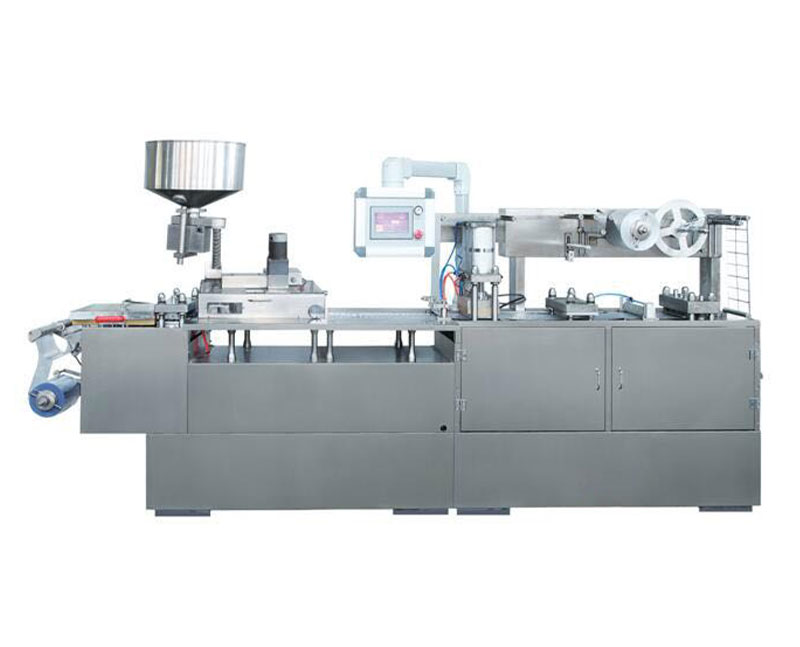
Equipment manufacturers serving the pharmaceutical industry typically build machines with stainless steel contact surfaces and smooth surfaces to meet GMP requirements. For a deeper look at how these GMP design principles are implemented, you can review our automatic blister packing equipment, fully certified to satisfy pharmaceutical GMP compliance requirements.
Pillar 2: Validation Support (IQ/OQ/PQ Documentation)
Validation is not an afterthought—it is a core deliverable. Pharmaceutical cartoning machines require documented evidence that they are installed correctly (IQ), operate within specified parameters (OQ), and consistently perform as intended under production conditions (PQ).
| Validation Phase | What It Verifies | Supplier Should Provide |
|---|---|---|
| IQ (Installation Qualification) | Machine installed per specifications; utilities connected correctly | Installation protocols, component checklists, calibration certificates |
| OQ (Operational Qualification) | Machine functions normally across operating range | Operational test protocols, acceptance criteria, and test result templates |
| PQ (Performance Qualification) | Machine consistently produces acceptable output under production conditions | Performance test protocols, sampling plans, documentation templates |
The ISPE three-stage validation lifecycle framework—packaging process design, packaging process qualification (which includes IQ/OQ/PQ), and continued process verification (CPV)—provides a structured approach to equipment validation. The ISPE Good Practice Guide for Packaging, Labeling, and Warehousing Facilities is the industry's only guidance relating to the design, construction, commissioning, and qualification of packaging facilities.
A supplier who provides off-the-shelf validation templates significantly reduces your time-to-market. Equipment suppliers serving the pharmaceutical industry typically provide validation documents (IQ/OQ/PQ) to assist regulatory submissions. A supplier who says “validation is your responsibility” may not be a good fit for a regulated environment.
Pillar 3: Serialization and Track-and-Trace Capability
Global serialization mandates require that each saleable pharmaceutical unit carry a unique identifier. Your cartoner must be capable of integrating with the systems that apply, read, and report these identifiers.
EU FMD Requirements: The EU Falsified Medicines Directive (EU FMD 2011/62/EU) mandates two safety features for prescription medicines: a unique 2D Data Matrix code carrying the product code, batch number, expiry date, and serial number, plus a tamper-evident seal.
US DSCSA Requirements: The Drug Supply Chain Security Act (DSCSA) requires that each saleable unit carry a unique product identifier embedded in a 2D DataMatrix barcode, containing the GTIN or NDC, serial number, lot number, and expiration date. The DSCSA defines requirements for an interoperable, electronic system to identify and trace pharmaceutical products throughout their distribution. Since November 27, 2023, all prescription drug transactions must include package-level data, and the FDA officially started enforcing DSCSA’s full requirements in May 2025.
Key serialization-related questions to ask each supplier:
-
Does the machine support integration with 2D DataMatrix printers and vision verification systems?
-
Can the control system generate audit trails that capture all changes to serialization-related data?
-
Is the HMI equipped with secure user access controls (unique IDs, password policies, role-based permissions)?
-
Does the machine support aggregation—linking individual cartons to cases and pallets?
-
Are Track & Trace modules compliant with EU FMD, US DSCSA, and China DTP?
Cartoning machines designed for pharmaceutical applications typically offer integration capability for vision systems, inkjet or laser coding units, and serialization modules, with open-architecture control systems allowing easy interfacing with Track & Trace platforms to support regulatory compliance.
For a deeper look at how packaging line equipment handles serialization integration across primary and secondary packaging stages, you can explore blister + cartoning line configurations that combine blister forming, cartoning, and serialization modules for end-to-end traceability.
Pillar 4: Cleanroom Compatibility
Pharmaceutical cartoning machines must operate within controlled environments that maintain sterility and prevent contamination. Design features to verify include:
-
Enclosed processing areas where products are handled, minimizing exposure to ambient air
-
Smooth, crevice-free surfaces that can be effectively cleaned and disinfected
-
Material compatibility with your facility’s cleaning agents and sanitization protocols
-
Compact, cleanroom-ready design with balcony-style construction to save valuable floor space
-
Minimal particle generation during operation, especially for aseptic environments
Equipment serving pharmaceutical applications typically features stainless steel contact surfaces and balcony-style construction designed to meet strict GMP requirements. The ISPE Good Practice Guide for Packaging, Labeling, and Warehousing Facilities helps companies meet CGMP requirements while avoiding product adulteration, product mix-up, label mix-up, and misbranding.
Pillar 5: Data Integrity and Regulatory Compliance
For facilities subject to FDA regulation, the cartoner’s control system must support compliance with 21 CFR Part 11, which governs electronic records and electronic signatures. Key elements to confirm:
-
Audit trails that capture all changes to GMP-relevant data with timestamp and user identification
-
Secure user access with unique IDs and password policies
-
Electronic signatures tied to verified individuals are legally equivalent to handwritten signatures
-
Data backup and disaster recovery processes tested and documented
For EU-regulated facilities, the same principles apply under EU GMP Annex 11 (Computerised Systems) and Annex 15 (Qualification and Validation).
Equipment designed for pharmaceutical applications typically features open-architecture PLCs that allow easy addition of new functions and IoT-enabled monitoring for predictive maintenance and real-time production analytics.
Practical Decision-Making: A Step-by-Step Selection Framework
Rather than starting with machine specifications, begin by documenting your regulatory and operational requirements. This framework ensures you evaluate machines against your actual needs, not hypothetical scenarios.
Step 1: Define Your Regulatory Jurisdictions
List the markets where you will sell products packaged on this line. Each jurisdiction imposes specific requirements:
| Market | Key Regulations | Serialization Requirement |
|---|---|---|
| United States | 21 CFR Part 11, 21 CFR Part 210/211, DSCSA | Yes (package-level serialization with 2D DataMatrix) |
| European Union | EU GMP Annex 11, Annex 15, EU FMD | Yes (EU FMD, unique 2D DataMatrix + tamper-evident seal) |
| China | China GMP (2010 Revision), NMPA requirements | Yes (serialization under evolving requirements) |
Step 2: Document Your Validation Timeline
Map the expected timeline from machine delivery to production readiness. A supplier who provides comprehensive validation documentation (FAT/SAT protocols, IQ/OQ/PQ templates, user manuals) can reduce commissioning time by weeks or months.
Step 3: Verify Material and Component Documentation
Request material certificates for all product-contact surfaces before purchase. For stainless steel components, confirm that the supplier can provide certification documents.
Step 4: Test Changeover Repeatability
Pharmaceutical lines often require validated changeover procedures. Request a changeover demonstration. Equipment designed for pharmaceutical applications typically features tool-free changeover for carton dimensions and AI-assisted parameter optimization that reduces setup time by up to 50% compared to traditional systems.
Step 5: Review the Supplier’s Qualification Track Record
Ask potential suppliers for references from other pharmaceutical customers who have successfully validated the same or similar machine. A supplier with documented experience in the pharmaceutical sector will understand validation requirements and provide appropriate documentation without being prompted.
Real-World Application Scenarios
Understanding how different pharmaceutical operations prioritize selection criteria helps you map your own requirements.
Scenario A: Large Pharmaceutical Manufacturer (High-Volume, Single Product)
-
Profile: 500,000+ cartons per shift, dedicated line, limited changeovers
-
Priority: Maximum speed, reliability, seamless serialization integration
-
Secondary: Validation efficiency (supplier-provided documentation reduces commissioning time)
-
Less critical: Fast changeover (infrequent format changes)
For this scenario, high-speed continuous-motion cartoners reaching up to 600 cartons/min are available, with servo-driven motion control ensuring precise carton placement and product loading even at high speeds.
Scenario B: Contract Pharmaceutical Packager (Multiple Clients, High SKU Count)
-
Profile: 10–20 changeovers per week, varying carton sizes, multiple serialization formats
-
Priority: Quick validated changeover, recipe storage for multiple formats, flexible serialization integration
-
Secondary: Comprehensive validation support (each client may require separate documentation)
-
Less critical: Ultra-high speed (changeover efficiency matters more than peak speed)
Equipment designed for high-SKU environments typically features tool-free changeover for blister size and carton dimensions (supporting 35–100mm carton widths), with AI-assisted parameter optimization reducing setup time by up to 50% compared to traditional systems.
For this scenario, exploring monoblock machines with intelligent changeover capabilities may be particularly valuable, as they allow specification changes through digital inputs with minimal downtime.
Scenario C: Emerging Pharma Manufacturer (First Regulated Line)
-
Profile: Building the first GMP-compliant packaging line, limited in-house validation expertise
-
Priority: Supplier-provided validation templates and documentation package
-
Secondary: Training and ongoing support
-
Less critical: Cutting-edge serialization features (basic compliance sufficient to start)
For emerging manufacturers who require completely unique carton formats or specialized product handling—such as inclined boxes, hexagonal boxes, or other non-standard formats—exploring tailored machine configurations for special pharmaceutical packaging needs may provide additional guidance.
Common Pitfalls in Pharma Cartoner Selection
Even experienced packaging engineers make mistakes when selecting pharmaceutical cartoning equipment. Here are three to avoid.
Pitfall #1: Prioritizing Speed Over Validation Support
A machine that promises high cartons-per-minute output is useless if your validation timeline slips by months because the supplier cannot provide proper documentation. In regulated environments, time-to-market often matters more than peak speed.
Pitfall #2: Assuming “GMP-Compatible” Means “GMP-Compliant”
Some suppliers claim their machines are “GMP-compatible” but provide no documentation, material certificates, or validation support. GMP compliance is demonstrated through evidence—not claims. Require documented proof. Equipment that is truly GMP-compliant is built with stainless steel, smooth surfaces, and optional dust extraction, with validation documents provided to assist regulatory submissions.
Pitfall #3: Overlooking Future Serialization Requirements
A machine that meets today’s serialization requirements may not support tomorrow’s aggregation mandates. Choose equipment with modular, upgradable serialization components rather than fixed, monolithic systems. Cartoning equipment with open-architecture PLCs allows easy addition of new functions, while Track & Trace modules can be upgraded to meet evolving regulatory requirements.
Next Steps: From Selection Framework to Supplier Shortlist
By now, you should have a clear framework for evaluating automatic cartoning machines for pharmaceutical lines. The selection process centers on five pillars: GMP-compliant materials, validation support, serialization readiness, cleanroom compatibility, and data integrity. These requirements are not optional—they are the baseline for regulated pharmaceutical production.
Once you have documented your regulatory jurisdictions, validation timeline, and product profile, the next logical step is to compare specific machine configurations against these criteria. You can review blister packaging machine options categorized by pharmaceutical-grade build and serialization readiness to identify which models align with your compliance requirements. For facilities investing in a full end-to-end packaging line, exploring integrated pharmaceutical packaging solutions will clarify how cartoner selection fits into a broader packaging strategy covering blister forming, leaflet insertion, and secondary bundling.
When you engage with suppliers, bring your documented requirements. Ask for material certificates, validation documentation samples, and serialization integration case studies. A supplier who provides these willingly is a partner worth considering. A supplier who deflects is likely not equipped for the pharmaceutical market.
Related Reading
-
How to sync an auto cartoner with a bottle filler for max output
-
Understanding bottle-to-carton line integration for pharmaceutical applications
-
Exploring monoblock configurations for space-constrained high-speed lines
-
How to evaluate the true cost of downtime in packaging operations
-
What speed range do you need from an automatic cartoning machine?