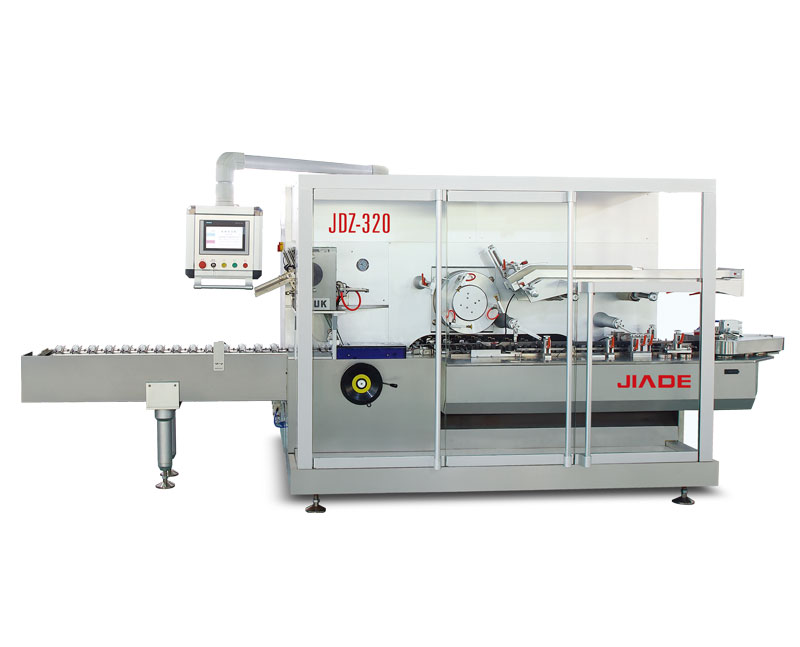

Exploring monoblock configurations for space-constrained high-speed lines
A plant manager recently shared a challenge that has become increasingly common: “Our pharmaceutical packaging volume has doubled in three years, but our cleanroom footprint hasn’t grown an inch. We need higher output, but there is literally no floor space for another machine or even a longer line. Something has to change.” This tension between rising production demands and fixed facility space is driving renewed interest in a different approach to packaging line design: the monoblock configuration. By combining multiple packaging processes—typically blister forming, filling, sealing, and cartoning—into a single integrated chassis, monoblock machines deliver high-speed output in a fraction of the space required by traditional separate machines.
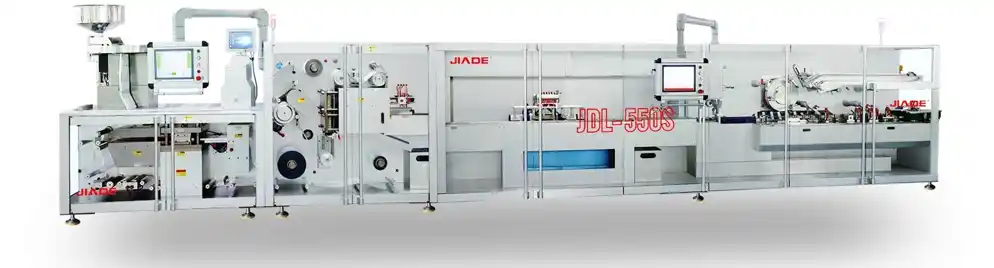
This guide explores what monoblock configurations are, when they make sense, and how they address the unique challenges of space-constrained, high-speed production environments.
What Exactly Is a Monoblock Packaging Machine?
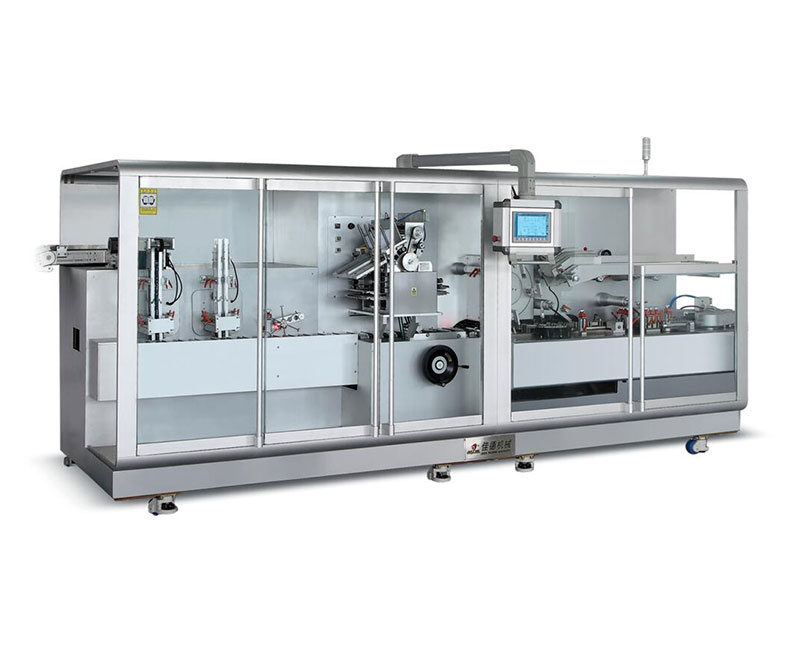
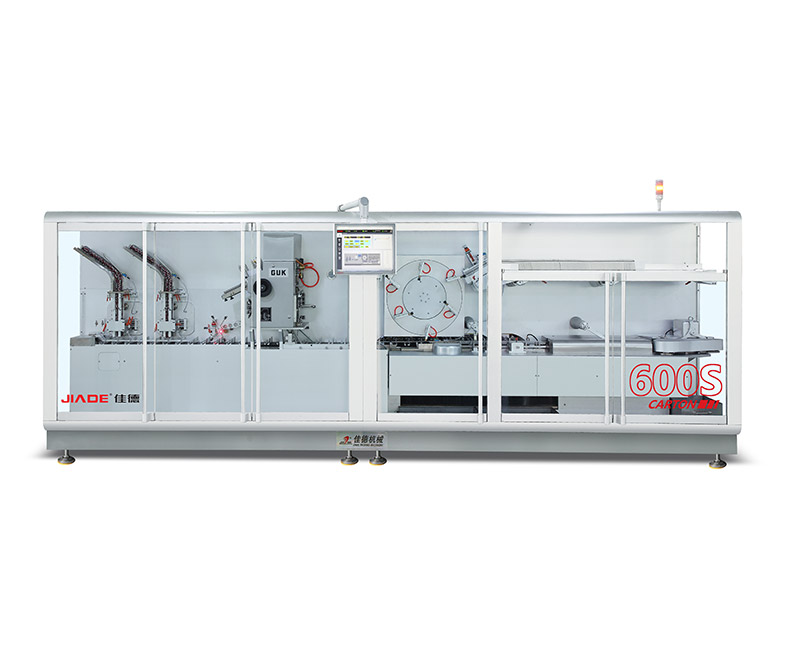
The term “monoblock” (or “monobloc”) refers to a packaging machine where multiple primary and secondary packaging functions are integrated into a single, unified chassis, with shared controls, a common drive system, and synchronized product flow.
Traditional Separate Machine Configuration
| Component | Separate unit | Transfer mechanism |
|---|---|---|
| Blister machine | Standalone | Conveyor belt |
| Cartoner | Standalone | Infeed system |
| Bundler (optional) | Standalone | Transfer conveyor |
In this traditional approach, each machine has its own frame, motor, control panel, and operator interface. Products move from one machine to the next via conveyors or transfer systems. Each transfer point is a potential jam location, and each separate machine requires its own clearance for maintenance and access.
Monoblock Integrated Configuration
| Integrated unit | Function | Notes |
|---|---|---|
| Blister forming station | Forms blisters from roll stock | Same chassis |
| Product filling station | Loads tablets/capsules | Same chassis |
| Blister sealing station | Seals with lidding foil | Same chassis |
| Cartoning station | Erects, loads, and closes cartons | Same chassis |
In a monoblock configuration, the product never leaves the machine between blister formation and carton closing. The entire process—from raw film roll to finished carton—occurs within a single, compact footprint.
A 2021 technical paper from the International Society for Pharmaceutical Engineering (ISPE) on advanced packaging line design noted that monoblock configurations can reduce total line footprint by 30–50% compared to traditional separate machines, primarily by eliminating transfer conveyors, buffer zones, and redundant safety guarding.
Key Components of a Blister-Cartoning Monoblock
To understand how monoblock machines achieve their space efficiency, it helps to look at the typical stations in a blister-cartoning monoblock.
| Station | Function | Space-saving feature |
|---|---|---|
| Blister forming | Heat forms cavities in PVC/ALU film | Vertical or compact horizontal forming saves length |
| Product filling | Drops tablets/capsules into cavities | Direct transfer without conveyor |
| Blister sealing | Seals with aluminum lidding foil | Integrated sealing station shares drive |
| Punching/cutting | Cuts individual blister packs | Cuts directly into cartoner infeed |
| Blister transfer | Moves cut blisters to cartoning | Short, direct path (often <1 meter) |
| Carton erecting | Opens flat carton blanks | Serves same chassis as blister section |
| Leaflet folding/inserting | Folds and inserts package insert | Synchronized with carton transport |
| Product loading | Pushes blister into carton | Direct transfer, no intermediate buffer |
| Carton closing | Folds flaps and applies glue or tucks | End of integrated line |
The critical insight is that eliminating transfer conveyors and buffer tables removes not only floor space but also the accumulation points where product jams typically occur.
The Space Advantage: Quantifying the Footprint Reduction
How much space can a monoblock configuration actually save? The answer depends on the specific machines being compared, but the savings are substantial.
Traditional Separate Line (Example Layout)
| Component | Typical length |
|---|---|
| Blister machine | 3.5–4.5 meters |
| Transfer conveyor/buffer | 1.5–3 meters |
| Cartoning machine | 3–5 meters |
| Total length | 8–12.5 meters |
| Maintenance clearance around each unit | Adds 1–2 meters per unit |
Monoblock Integrated Line (Example Layout)
| Component | Typical length |
|---|---|
| Blister-cartoning monoblock | 4.5–7 meters |
| Transfer conveyors | None (integrated) |
| Total length | 4.5–7 meters |
| Maintenance clearance (single unit) | Reduced overall |
The monoblock configuration can reduce linear footprint by 30–50% while also reducing width and height requirements in many cases. For a facility where floor space costs $200–500 per square foot in cleanroom construction and operating expenses, this reduction translates directly into avoided capital expenditure.
The user benefit summarized: A monoblock allows you to add high-speed cartoning capacity without building a larger cleanroom or reconfiguring your entire facility layout. For many manufacturers, this is the difference between staying in an existing facility and a costly expansion or relocation.
Beyond Space: Four Additional Monoblock Advantages
While space savings is often the headline benefit, monoblock configurations offer several other important advantages for high-speed lines.
1. Reduced Product Handling and Damage
Every time a product transfers from one machine to another, it experiences acceleration, deceleration, and potential impact. In a monoblock, the product moves continuously through the process with minimal transfers. For fragile products—such as pre-filled syringes, soft gelatin capsules, or delicate diagnostic devices—this reduced handling directly lowers rejection rates.
A study from the Journal of Pharmaceutical Innovation (2020) found that blister-to-carton transfer damage rates dropped by an average of 42% when facilities switched from separate machines to integrated monoblock configurations, primarily due to the elimination of accumulation tables and transfer chutes.
2. Simplified Synchronization
In a traditional separate line, each machine has its own drive and control system. Keeping them synchronized requires sensors, feedback loops, and complex PLC programming. A mismatch between blister machine output and cartoner infeed speed creates jams or starves the line.
In a monoblock, a single control system coordinates all motions. The blister output speed is the cartoner infeed speed by definition. There is no mismatch to manage. This simplifies startup, reduces tuning time, and improves overall line reliability.
To understand how this synchronization works in practice, you can review the blister and cartoning integrated solution architectures that prioritize seamless product flow.
3. Lower Validation Burden (for Pharmaceutical Lines)
Pharmaceutical lines require validation—installation qualification (IQ), operational qualification (OQ), and performance qualification (PQ). Each separate machine in a traditional line requires its own validation documentation and protocol. Transfer systems between machines must also be validated.
A monoblock is validated as a single unit. The validation effort is typically 20–30% less than validating separate machines, according to industry benchmarks. This reduces both time-to-production and regulatory documentation costs.
4. Simplified Cleaning and Maintenance
Modern monoblocks are designed with GMP compliance in mind, featuring open “balcony-style” construction, stainless steel contact surfaces, and accessible components. Because the machine is one chassis rather than multiple units, operators clean one area rather than walking between separate machines. Maintenance technicians service one integrated system rather than multiple vendors’ equipment.
When Does a Monoblock Configuration Make Sense?
Monoblock configurations are not the right answer for every application. Use the following decision framework to evaluate whether a monoblock fits your operation.
Strong Fit for Monoblock
| Condition | Why It Fits |
|---|---|
| Space is severely constrained | The primary benefit—monoblock maximizes output per square meter |
| High-speed, continuous operation | Synchronization advantage eliminates line balancing issues |
| Single product family with limited format variation | Monoblocks can change over, but separate machines may offer more flexibility for extreme variety |
| Pharmaceutical or high-value products | Reduced handling and validation burden provide strong ROI |
| New line installation | No legacy equipment to integrate; monoblock simplifies project management |
May Prefer Separate Machines
| Condition | Why Separate May Be Better |
|---|---|
| Extreme product variety with frequent, complex changeovers | Separate machines allow you to change only the section needed for a given batch |
| Mixing and matching different brands | Monoblock is usually a single vendor solution |
| Very low speeds (e.g., <100 cartons/min) | Space savings less critical; separate machines may be more cost-effective |
| Existing line expansion | You may need to add cartoning to an existing blister line; monoblock requires replacing both |
For facilities where both monoblock and separate configurations could work, the decision often comes down to total cost of ownership calculations that include floor space, validation, and operator costs.
Changeover in Monoblock vs. Separate Configurations
A common concern about monoblock machines is whether they sacrifice changeover flexibility for space efficiency. Modern servo-driven monoblocks have largely addressed this concern.
| Aspect | Traditional Separate Machines | Modern Servo Monoblock |
|---|---|---|
| Changeover time | 45–90 minutes (each machine individually) | 20–40 minutes (single coordinated change) |
| Tool requirement | Tools for each machine | Often tool-free or minimal-tool |
| Adjustment method | Manual repositioning on each machine | HMI input, servo-driven synchronization across all stations |
| Format recipe storage | Separate for each machine (if available) | Unified recipe—one recall sets all stations |
The key enabler is full-servo control. When all motions—blister forming, sealing, cutting, carton erecting, product loading, carton closing—are driven by independent servo motors under common PLC control, a format change becomes a coordinated adjustment rather than a series of independent setups.
For a deeper understanding of how servo technology enables fast changeover in integrated machines, you can explore the continuous and full-servo cartoning machine features that are shared across monoblock designs.
Real-World Applications of Monoblock Configurations
Application A: Pharmaceutical Contract Packager with Cleanroom Constraints
-
Challenge: 400 sq m ISO 8 cleanroom at capacity. Need to add 30% more output without expansion.
-
Solution: Replaced separate blister line (2 machines, 9 meters total) with single monoblock (5.5 meters). Freed 3.5 meters for additional equipment.
-
Result: Output increased 35% within same footprint. Validation time reduced by 25%.
Application B: High-Volume Nutraceutical Manufacturer
-
Challenge: Running 500+ cartons per minute, but transfer jams between blister machine and cartoner cause 8–10% efficiency loss.
-
Solution: Installed high-speed monoblock with direct blister-to-cartoner transfer.
-
Result: Line efficiency improved from 78% to 91%. Rejection rate from transfer damage dropped by 60%.
Application C: Medical Device Manufacturer with Sensitive Products
-
Challenge: Pre-filled syringe trays damaged during transfer from blister machine to cartoner. Rejection rate of 4% unacceptable.
-
Solution: Monoblock with gentle, servo-controlled product handling and no intermediate transfer points.
-
Result: Transfer-related damage virtually eliminated. Rejection rate below 0.5%.
For specialized applications requiring unique carton formats (slanted boxes, hexagonal boxes) or non-standard blister configurations, exploring customized monoblock solutions may be necessary.
Limitations and Considerations
No configuration is perfect for every application. Be aware of these potential monoblock limitations.
Vendor Lock-in Risk
A monoblock is typically supplied by a single manufacturer. If you have an existing relationship with a blister machine vendor and a separate cartoner vendor, moving to a monoblock may mean choosing one vendor over the other. Evaluate the technical capabilities and support track record of potential monoblock suppliers carefully.
Changeover Complexity for Extreme Variety
If your product mix includes wildly different blister formats (e.g., tablets one day, large syringes the next) and carton sizes, a monoblock changeover may involve more stations than a separate-line changeover. For example, changing only the cartoner while leaving the blister section unchanged is not an option on a monoblock. For facilities with extreme variety, a hybrid approach—monoblock for high-volume products, separate machines for specialty runs—may be optimal.
Higher Initial Investment (Typically)
Monoblock machines generally have a higher purchase price than the sum of entry-level separate machines, although the gap narrows when comparing equivalent performance levels. The ROI comes from space savings, efficiency gains, and reduced validation costs. Run a total cost of ownership analysis that includes these factors before deciding.
Next Steps: Evaluating Monoblock for Your Line
By now, you should have a clear understanding of what monoblock configurations offer: substantial space savings, reduced product handling, simplified synchronization, and lower validation burden. You also know when monoblocks make the most sense—space-constrained, high-speed, pharmaceutical or high-value product applications—and when separate machines might be preferable.
To evaluate whether a monoblock is right for your specific operation:
-
Measure your current line footprint and calculate your cleanroom cost per square meter
-
Document your changeover frequency and batch size distribution
-
Identify your primary efficiency loss points (transfers? jams? synchronization issues?)
-
Request a layout comparison from suppliers showing monoblock vs. separate configuration for your exact products
Once you have established your requirements, you can explore specific monoblock machine specifications designed for pharmaceutical and nutraceutical applications.
Related Reading
-
Horizontal vs vertical automatic cartoning machine: Which one fits your line?
-
How to adjust an automatic cartoner for different product sizes
-
How to choose an automatic cartoner for small batches and quick changeover
-
How to evaluate the true cost of downtime in packaging operations
-
Exploring customized solutions for special carton formats and complex applications