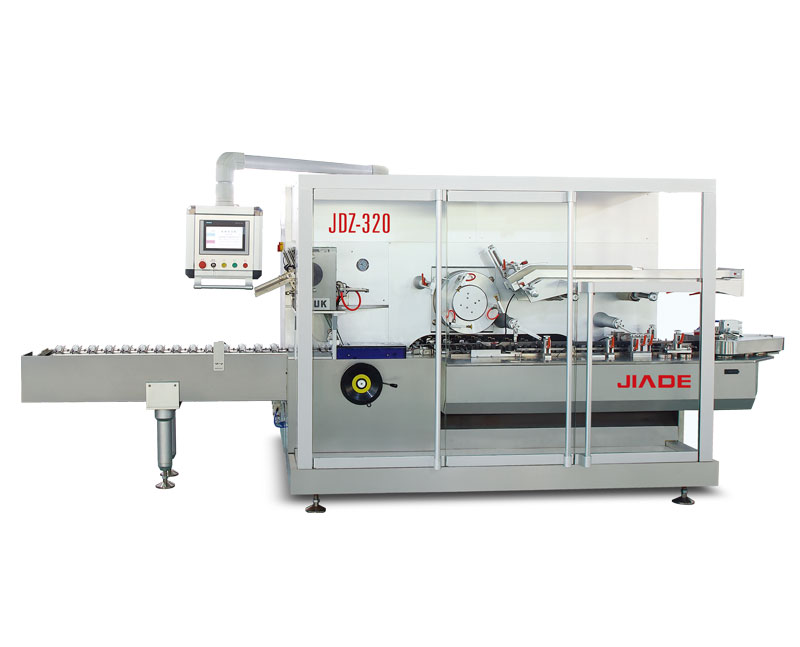

How to Sync an Auto Cartoner with a Bottle Filler for Max Output
A production manager recently described a common headache: “Our bottle filler runs at 200 bottles per minute. Our cartoner is rated for 300 cartons per minute. On paper, the cartoner should never be the bottleneck. But in reality, the line constantly jams, the cartoner starves for product, and we’re lucky to get 150 finished cartons per minute.” This scenario is surprisingly common. The gap between individual machine ratings and actual line output is almost always caused by poor synchronization between the filler and the cartoner.
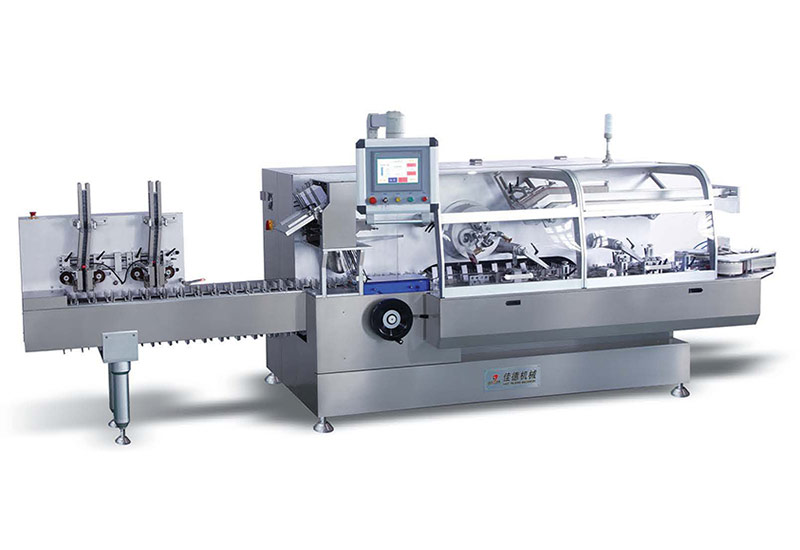
This guide provides a practical framework for syncing an automatic cartoner with a bottle filler—covering speed matching, buffer design, changeover coordination, and the control systems that make it all work.
Why “Faster” Doesn’t Mean “More Output”
The most common mistake in line design is assuming that if each machine meets its speed target individually, the line will meet its overall target. In reality, a packaging line’s throughput is governed by its slowest element—and by the gaps between elements.
The Synchronization Gap
| Issue | What Happens | Result |
|---|---|---|
| Cartoner faster than filler | Cartoner runs out of bottles; starves and stops | Lost cartoner capacity; inefficient use of equipment |
| Filler faster than cartoner | Bottles accumulate; backpressure builds; jams occur | Product damage; line stoppages; safety risks |
| Speed mismatch during changeover | One machine ready before the other | Idle time on one machine; extended overall changeover |
The user benefit summarized: A perfectly synchronized line running at 80% of each machine’s peak speed will consistently outperform a line where one machine runs at 95% and the other constantly stops and starts.
Industry research confirms this principle. A turnkey line’s cycle speed must be carefully balanced with the capabilities of both preceding and following equipment—the cartoner’s pace must match the output of a filling line to prevent backpressure or starved feeds. When integration is treated as a foundational design phase rather than an afterthought, the cartoner functions not as a standalone device but as a synchronized component within a unified workflow.
The Three Pillars of Filler-Cartoner Synchronization
Effective synchronization rests on three pillars: speed matching, buffer management, and control system integration.
Pillar 1: Speed Matching – Calculating Your True Line Speed
Start by calculating the sustainable output of each machine—not the rated speed.
Sustainable Output = Rated Speed × (1 – Planned Downtime %) × (1 – Unplanned Downtime %)
For example, a filler rated at 200 bottles/min with 10% total downtime delivers 180 bottles/min sustainably. A cartoner rated at 300 cartons/min with the same downtime delivers 270 cartons/min. The line’s maximum sustainable output is 180 cartons/min—the filler’s output—because the cartoner cannot run faster than bottles arrive.
The Rule of Thumb: The cartoner should be 10–20% faster than the filler’s sustainable output. This allows the cartoner to clear small upstream interruptions without starving. A cartoner that is significantly faster than the filler will simply sit idle waiting for product—wasted capacity you paid for.
Pillar 2: Buffer Management – The Accumulation Zone
No matter how well you match speeds, minor fluctuations will occur. A buffer or accumulation zone between the filler and cartoner absorbs these fluctuations.
| Buffer Type | How It Works | Best For |
|---|---|---|
| In-line accumulation table | Bottles accumulate on a conveyor section; sensors control start/stop | Moderate speed differences; simple lines |
| Turntable accumulator | Bottles spiral on a rotating table; first-in, first-out | High speeds; space-constrained lines |
| Zero-pressure accumulation | Sensors maintain gaps between bottles; no bottle-to-bottle contact | Fragile bottles; pharmaceutical applications |
Sizing Your Buffer: A general guideline is to size the buffer for 2–3 minutes of filler output at full speed. For a 200 bottles/min filler, this means 400–600 bottles of buffer capacity. This gives the cartoner enough time to clear minor jams without starving, and gives the filler enough time to restart after a brief stop without over-pressuring the cartoner.
Pillar 3: Control System Integration – The “Single Brain” Approach
The most advanced synchronization strategy uses a unified control system that manages both the filler and the cartoner—and ideally the entire line.
| Control Approach | How It Works | Advantages |
|---|---|---|
| Independent controls | Each machine has its own PLC; manual speed matching | Simple; low initial cost |
| Linked controls | Machines share speed signals via communication protocols | Better coordination; automatic speed following |
| Unified line control | Single control system manages all machines; recipe-based operation | Seamless synchronization; data collection; remote access |
The 2025 ISPE Facility of the Year Award winner—a flexible bottle packaging line from Johnson & Johnson—demonstrates the power of unified control. The line is structured in modular cells, all managed by a “unique brain, a unique control system that controls the entire line, and it is integrated with the upper-level systems to receive orders, production data, and recipe”. This single control system enables seamless automation with robotics integration, including the oversight of 17 robots.
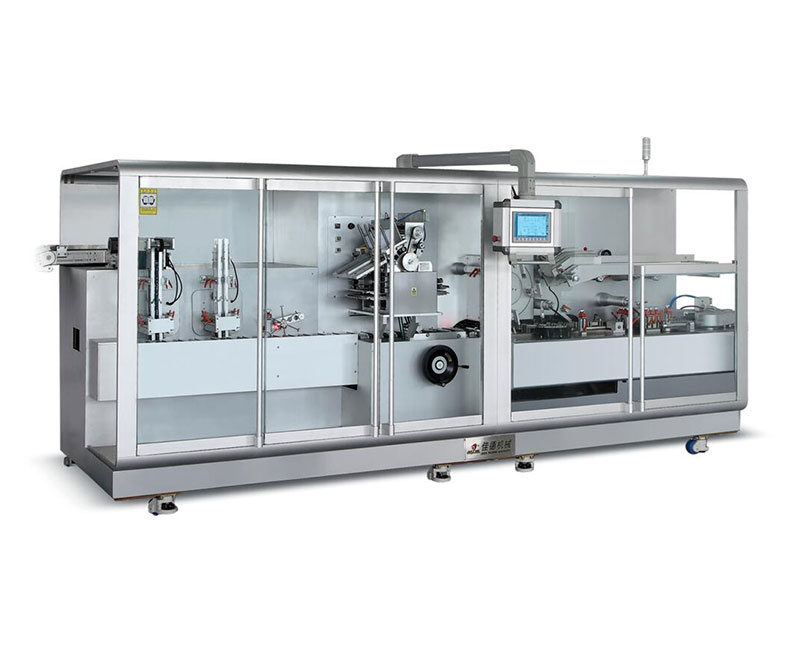
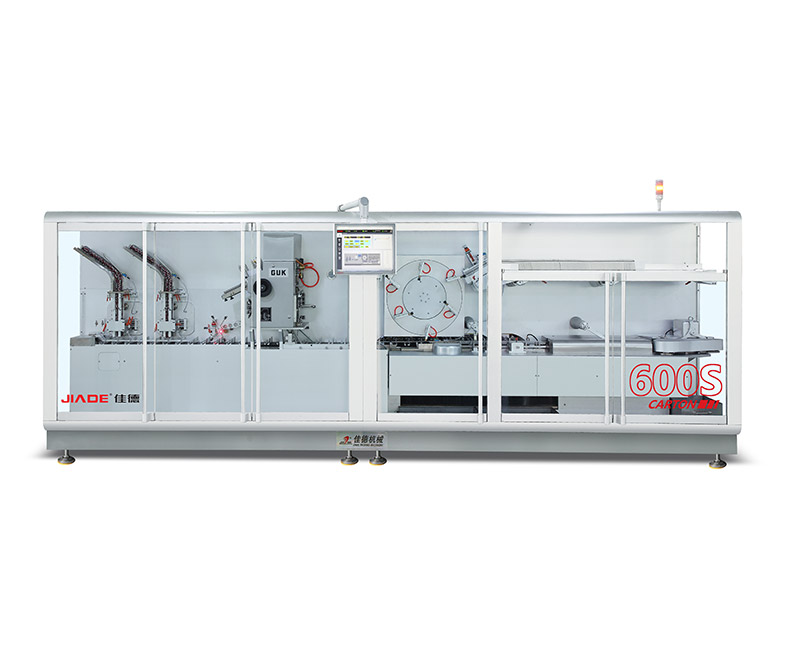
For a detailed look at how unified control principles are applied in integrated packaging systems, you can explore automatic cartoning machine designs with PLC-based automation and HMI integration.
Changeover Synchronization – The Hidden Bottleneck
Speed matching matters during steady-state production. But changeover synchronization often determines whether your line can actually achieve its target output across multiple SKUs.
The Changeover Challenge
| Scenario | Filler Changeover | Cartoner Changeover | Line Impact |
|---|---|---|---|
| Staggered changeovers | 30 minutes | 45 minutes | 45 minutes total downtime (cartoner drives the timeline) |
| Coordinated changeovers | 30 minutes | 30 minutes (prepared in parallel) | 30 minutes total downtime (savings of 15 minutes) |
| Integrated changeover | 15 minutes (recipe-driven) | 15 minutes (recipe-driven) | 15 minutes total downtime (maximum efficiency) |
The Fix: Parallel Changeover Planning
The most effective strategy is to plan changeovers so both machines are prepared simultaneously. This means:
-
Pre-staging format parts for both machines before the line stops
-
Coordinating cleaning schedules so both machines are ready at the same time
-
Using recipe-based changeovers where both machines recall saved settings from a central system
The ISPE award-winning line achieved a changeover time reduction from 6 hours to 45 minutes—a dramatic improvement enabled by a line designed with no format parts and a unified control system. While this is a highly advanced example, the principle applies at any scale: coordinated changeovers are faster than sequential changeovers.
Real-World Application Scenarios
Scenario A: High-Volume Pharmaceutical Bottle Line
-
Profile: 200 bottles/min filler, 300 cartons/min cartoner, single product, long runs
-
Synchronization priority: Speed matching and buffer sizing
-
Recommended approach: Size buffer for 3 minutes of filler output; set cartoner speed to match filler sustainable output (not peak); use linked controls for automatic speed following
-
Key metric: Line OEE (Overall Equipment Effectiveness) target >85%
Scenario B: Contract Packager with Multiple Bottle Sizes
-
Profile: 150 bottles/min filler (variable by size), 250 cartons/min cartoner, 5–10 changeovers per week
-
Synchronization priority: Changeover coordination and recipe management
-
Recommended approach: Implement recipe-based changeovers on both machines; coordinate changeover schedules; pre-stage format parts
-
Key metric: Average changeover time target <30 minutes
Scenario C: High-Value, Small-Batch Production
-
Profile: Batches under 3,000 bottles, 500+ SKUs, 170 bottle configurations
-
Synchronization priority: Maximum flexibility with minimal downtime
-
Recommended approach: Unified control system with recipe storage; modular line design; no-format-part changeover where possible
-
Key metric: Changeover time measured in minutes, not hours
For facilities running integrated blister and cartoning lines, the same synchronization principles apply—but the upstream machine is a blister packer rather than a bottle filler. The buffer design and control integration strategies remain the same.
Common Synchronization Mistakes and How to Avoid Them
Mistake #1: Sizing the Cartoner to the Filler’s Peak Speed
Buying a cartoner that matches the filler’s peak speed (not sustainable speed) means you are paying for capacity you cannot use. The filler will rarely run at peak, and the cartoner will spend most of its time idle.
Mistake #2: Skipping the Buffer
A buffer is not optional—it is essential. Without a buffer, any brief stop on either machine stops the entire line. With a properly sized buffer, minor interruptions are absorbed without line-wide downtime.
Mistake #3: Treating Changeovers as Independent Events
If the filler and cartoner change over at different times or speeds, the line’s total changeover time is the sum of both—not the longer of the two. Coordinate changeovers to run in parallel.
Mistake #4: Ignoring the Discharge Side
Synchronization does not end at the cartoner discharge. The cartoner must also sync with downstream equipment like bundlers or case packers. A cartoner that feeds a slower case packer will accumulate finished cartons and eventually jam.
Next Steps: From Sync Strategy to Line Design
By now, you should have a clear framework for synchronizing an automatic cartoner with a bottle filler:
| Decision Factor | What to Consider |
|---|---|
| Speed matching | Calculate sustainable output, not rated speed; cartoner 10–20% faster than filler |
| Buffer sizing | 2–3 minutes of filler output capacity |
| Control integration | Linked or unified controls for automatic speed following |
| Changeover coordination | Parallel planning; recipe-based changeovers |
| Discharge synchronization | Match cartoner output to the downstream equipment speed |
Once you have established your target line speed, buffer requirements, and changeover frequency, the next logical step is to compare specific machine configurations against these criteria. You can review automatic cartoning machine designs across different speed and flexibility tiers to see which models align with your filler output and format range.
For facilities evaluating complete lines that include bottle filling, cartoning, and downstream packaging, exploring integrated packaging solutions for complex production environments can help you understand how cartoner selection fits within a broader line strategy—including how unified control systems manage the entire workflow from filler to palletizer.
Related Reading
-
How to pick an automatic cartoning machine for small batches and quick changeover
-
What speed range do you need from an automatic cartoning machine?
-
How to evaluate the true cost of downtime in packaging operations
-
Understanding bottle-to-carton line integration for pharmaceutical applications
-
Exploring monoblock configurations for space-constrained high-speed lines