
Horizontal vs Vertical Automatic Cartoning Machine: Which One?
A packaging engineer recently posed a question that many face when specifying new equipment: “We’re adding a cartoning line for our pharmaceutical blister packs. Some suppliers are showing me horizontal machines, others vertical. Both say their approach is better. How do I actually decide?” The horizontal versus vertical question is one of the most fundamental choices in automatic cartoning. Yet the answer is rarely about which is “better” in absolute terms—it is about which orientation aligns with your product characteristics, facility layout, and production volume.
This guide compares horizontal and vertical automatic cartoning machines across the factors that matter most, helping you make an informed decision based on your specific application.
Understanding the Fundamental Difference in Orientation
Before diving into pros and cons, it helps to understand what “horizontal” and “vertical” actually refer to in cartoning machines.
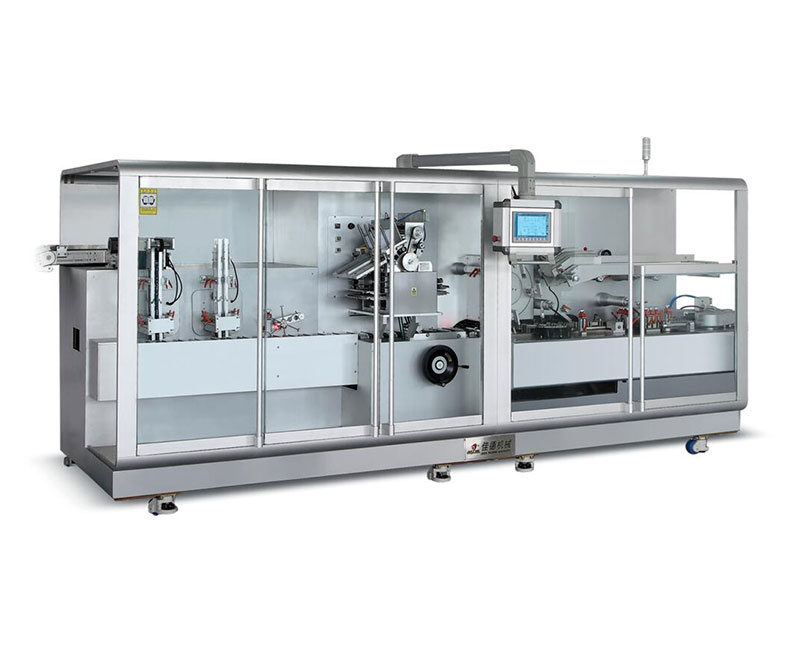
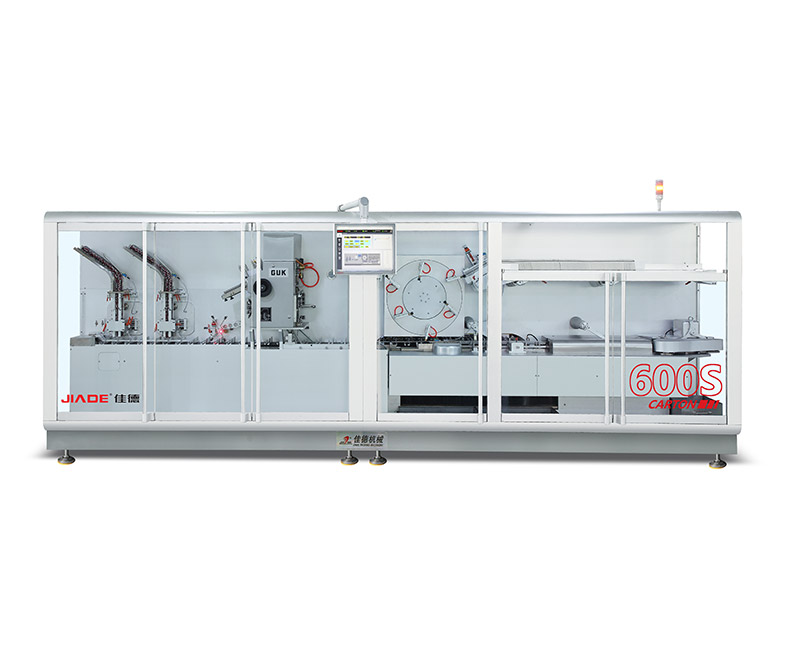
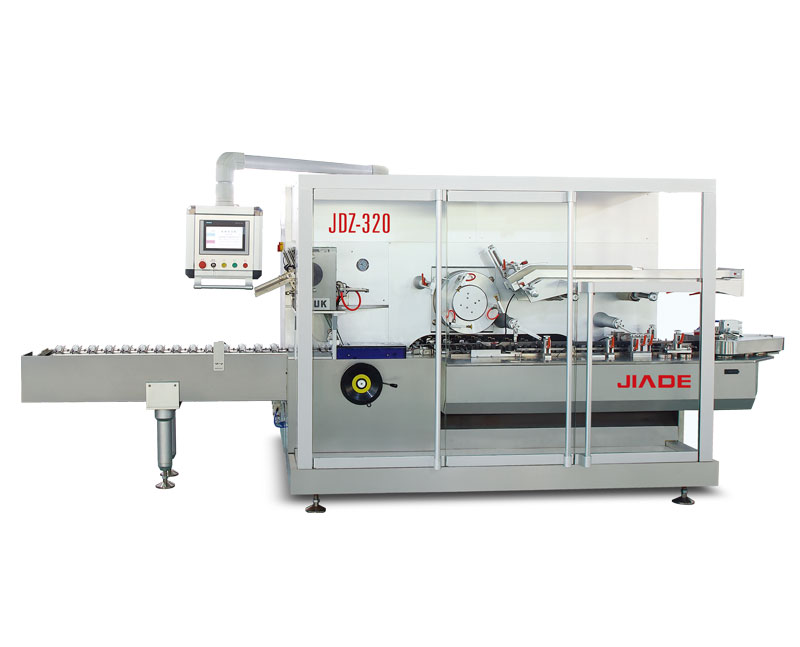
Horizontal Automatic Cartoning Machine
In a horizontal cartoner, the carton moves through the machine lying flat, with its major axis parallel to the floor. Cartons are typically erected from a flat blank, pushed open, and then the product is inserted from the side or end. The carton remains horizontal throughout the loading and closing process.
-
Product insertion direction: Horizontal (product slides or is pushed into the open carton from the side)
-
Typical carton orientation on infeed: Flat, with the opening facing the product
-
Common applications: Blister packs, bottles, tubes, sachets, pouches, folded leaflets
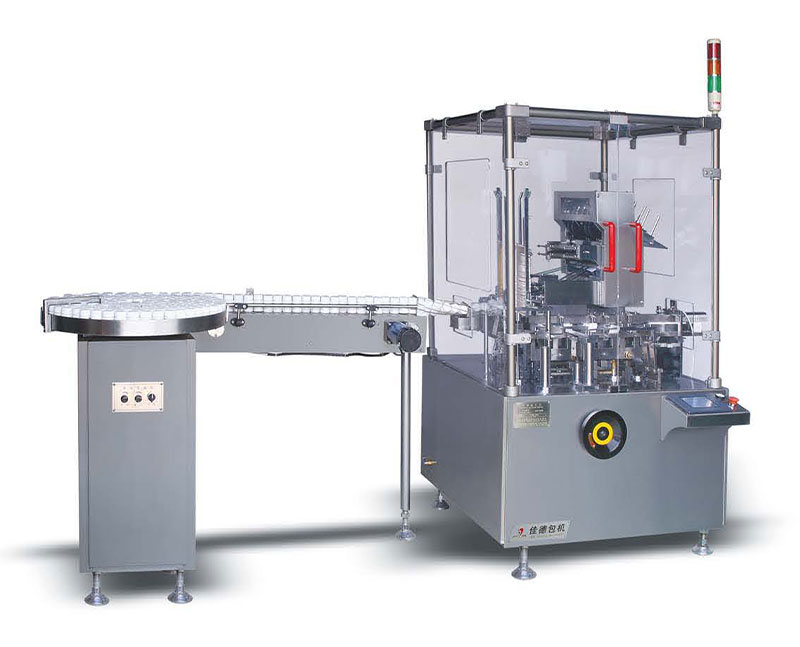
Vertical Automatic Cartoning Machine
In a vertical cartoner, the carton moves through the machine standing on end, with its major axis perpendicular to the floor. Cartons are often pre-formed or erected in a vertical orientation. Products are typically dropped or lowered into the open carton from above.
-
Product insertion direction: Vertical (product drops or is lowered into the carton from top)
-
Typical carton orientation on infeed: Standing, opening facing upward
-
Common applications: Granules, powders, loose items, bags, certain food products
According to the Packaging Machinery Manufacturers Institute (PMMI) guidelines for cartoning equipment classification, horizontal cartoners account for approximately 75% of all automatic cartoning machines installed in pharmaceutical and healthcare applications, while vertical cartoners are more common in food and granular product packaging. The choice is heavily driven by product characteristics rather than regional preferences.
Head-to-Head Comparison: Key Decision Factors
The following table compares horizontal and vertical automatic cartoning machines across the factors that directly impact your operations.
| Factor | Horizontal Cartoner | Vertical Cartoner |
|---|---|---|
| Product type suitability | Solid, shaped items (blisters, bottles, tubes, syringes, devices); items that maintain shape | Granular, pourable, or loose items (powders, granules, bags, flowable products) |
| Product handling | Gentle—product is pushed or placed, minimal drop | Product drops into carton (may damage fragile items) |
| Typical speed range | 100–600+ cartons/min | 40–150 cartons/min |
| Floor space footprint | Longer linear footprint (3–6 meters typical) | More compact, vertical footprint |
| Changeover time | 15–45 minutes (modern servo-driven models) | 20–60 minutes (often more complex due to vertical transport) |
| Carton style | Tuck-style, glue-sealed, display cartons | Often glue-sealed or pre-formed |
| Integration with upstream equipment | Easy—aligns with horizontal blister machines, feeders | May require product reorientation or drop chutes |
| Typical industries | Pharmaceutical, medical device, cosmetic, nutraceutical, consumer goods | Food (granules, powders), hardware, certain agricultural products |
The user benefit summarized: If your product is a solid, shaped item that could be damaged by dropping—such as a filled blister pack, a glass bottle, or a medical syringe—a horizontal cartoner is almost always the correct choice. If your product flows freely and can tolerate a short drop—such as a bag of powder or a granular material in a sachet—a vertical cartoner may be more space-efficient and cost-effective.
Five Critical Questions to Guide Your Decision
Rather than starting with “horizontal or vertical,” start with these five questions about your product and operation.
Question 1: How does your product behave when dropped?
Place a product unit on a table. Lift it 20–30 cm (8–12 inches) and let it go. Does it land intact? Is the packaging damaged? Does the product shift inside its primary packaging?
-
If product remains intact and undamaged: Vertical cartoning may be acceptable
-
If product could be damaged or contents could shift: Horizontal cartoning is strongly preferred
For pharmaceutical blister packs, the answer is almost always horizontal. A dropped blister pack may not rupture, but the tablets or capsules can shift within their cavities, potentially causing customer complaints or verification failures.
Question 2: What is your upstream equipment?
Look at the machine feeding your cartoner. Is it a horizontal blister packaging machine that outputs flat blisters? A bottle filler that discharges upright bottles? A sachet machine that produces flat pouches?
-
If upstream output is horizontal/flat: Horizontal cartoner creates a straight, uninterrupted product flow
-
If upstream output requires reorientation: Consider whether the reorientation step adds complexity and failure points
For facilities where upstream and downstream synchronization is critical, exploring blister and cartoning integrated solutions can reveal how matched orientations reduce transfer complexity.
Question 3: What is your available floor space?
Measure your proposed cartoner location. Horizontal cartoners typically require 4–7 meters of linear length, depending on speed and features. Vertical cartoners have a smaller footprint but require height clearance for the vertical transport and magazine.
-
If you have long, narrow available space: Horizontal may fit well
-
If you have a compact, square space with high ceilings, Vertical may be more space-efficient
Question 4: What are your speed requirements?
Consider your target output per shift. Horizontal cartoners dominate high-speed applications (above 200 cartons/min). Vertical cartoners are typically used in lower-speed applications (under 150 cartons/min).
-
*If you need >200 cartons/min consistently:* Horizontal is the proven solution
-
*If you need <100 cartons/min and product suits vertical:* Both orientations may work
Question 5: How frequently will you change formats?
Consider your batch sizes and changeover frequency. Horizontal cartoners—particularly modern servo-driven models—are designed for tool-free format changes and quick changeover. Vertical cartoners often have more complex changeovers due to vertical transport chains and magazine adjustments.
-
If you run frequent small batches, Horizontal with quick-change features is strongly preferred
-
If you run long, dedicated runs of the same format, either orientation may work
The Horizontal Advantage: Why It Dominates Pharmaceutical and Healthcare
In pharmaceutical, nutraceutical, and medical device applications, horizontal automatic cartoning machines are the overwhelming industry standard. There are several reasons for this dominance.
Gentle Product Handling
Pharmaceutical products—blister packs, bottles of tablets, pre-filled syringes, diagnostic devices—are often sensitive to impact. A horizontal cartoner inserts the product with a controlled pushing motion, not a free fall. This preserves product integrity and prevents the “pill shake” that can cause customer complaints.
GMP Compliance
Horizontal cartoners are typically designed with open, accessible frames (balcony-style construction) that are easier to clean and inspect. This aligns with GMP requirements for pharmaceutical manufacturing. Vertical cartoners can have more enclosed spaces where product dust might accumulate.
Integration with Blister Lines
Horizontal blister packaging machines output flat blisters. A horizontal cartoner receives those blisters directly, with no reorientation needed. This creates a continuous, synchronized blister-to-cartoning line with minimal transfer points—and fewer transfer points mean fewer jam opportunities.
Proven Speed Capability
High-volume pharmaceutical production often requires cartoning speeds above 300 units per minute. Horizontal cartoners have demonstrated reliable performance at these speeds for decades. Full-servo horizontal cartoners now achieve 600 cartons per minute in continuous operation.
A 2022 survey of pharmaceutical packaging engineers conducted by Pharmaceutical Processing World found that 92% of respondents selected horizontal cartoners for solid dosage packaging applications. The primary reasons cited were product handling gentleness (87%), integration ease with blister lines (79%), and changeover speed (68%).
When Vertical Cartoning Makes Sense
Despite the dominance of horizontal machines in many industries, vertical automatic cartoning machines remain the right choice for specific applications.
Granular and Pourable Products
If your product is a flowable solid—such as a bag of granulated sugar, a pouch of protein powder, or a box of tea bags—a vertical cartoner is often ideal. The product can be dropped or poured directly into the carton from above, simplifying the infeed.
Space-Constrained Facilities
Some facilities simply do not have the linear footprint for a horizontal cartoner. In these cases, a vertical machine may fit into a compact area where a horizontal machine would not. However, verify that you have sufficient overhead clearance for the vertical transport and magazine.
Lower-Speed, Dedicated Lines
For a line that runs one product format continuously at moderate speeds (e.g., 60–100 cartons/min), a vertical cartoner can be a cost-effective solution. The changeover complexity is less relevant if you rarely change formats.
Certain Food and Confectionery Applications
In food packaging, where products are often pouched or bagged before cartoning, vertical cartoners are common. The bag-in-box application is a classic example: a vertical cartoner drops a bag of product into an erected carton.
Real-World Application Examples
Seeing how different facilities made their choice can help clarify your own decision.
Example A: Pharmaceutical Blister Pack Manufacturer
-
Product: Aluminum-aluminum blister packs of tablets
-
Volume: 400,000 blisters per shift
-
Decision: Horizontal automatic cartoning machine
-
Rationale: Gentle product handling required; upstream blister machine is horizontal; speed needed >300 cartons/min; GMP compliance essential
-
Result: Integrated line achieves 400+ cartons/min with < 20-minute changeovers
Example B: Specialty Food Packager (Granules)
-
Product: Sachets of powdered drink mix
-
Volume: 50,000 sachets per shift, packed 20 sachets per carton
-
Decision: Vertical automatic cartoning machine
-
Rationale: Product is pourable and can be dropped; compact footprint needed; speed requirements moderate (60 cartons/min)
-
Result: Space-efficient line with acceptable changeover time for limited SKUs
Example C: Medical Device Contract Manufacturer
-
Product: Small diagnostic test kits in sealed pouches
-
Volume: Frequent small batches, high mix
-
Decision: Horizontal automatic cartoning machine with quick-change features
-
Rationale: Product is delicate and cannot be dropped; frequent format changes require fast changeover; need to integrate with pouch feeder
-
Result: Flexible line handles 15+ SKUs per week with 15-minute changeovers
For facilities with specialized carton requirements—such as slanted boxes, hexagonal boxes, or other non-standard formats—exploring customized cartoning solutions may be necessary regardless of orientation choice.
The Monoblock Alternative: When Orientation Boundaries Blur
Before finalizing your decision, consider whether a monoblock or integrated solution might eliminate the orientation question. Some modern packaging lines combine blister forming, filling, sealing, and cartoning into a single chassis. In these monoblock machine configurations, the product never leaves the machine between primary packaging and cartoning. The cartoning section is typically horizontal, but the integration is so seamless that orientation becomes a design detail rather than a purchasing decision.
Monoblock solutions are particularly common in high-volume pharmaceutical applications where minimizing product handling and maximizing line efficiency are critical.
Next Steps: From Orientation Decision to Specification
By now, you should have a clear framework for deciding between a horizontal and vertical automatic cartoning machine. The decision largely comes down to:
-
Product characteristics: Solid and shaped → horizontal; granular or pourable → vertical or horizontal depending on fragility
-
Upstream equipment: Horizontal output → horizontal; requires reorientation → evaluate complexity
-
Speed requirements: >200 cartons/min → horizontal; <150 cartons/min → either may work
-
Changeover frequency: Frequent → horizontal (especially servo-driven with quick-change)
-
Footprint constraints: Severe space limits → evaluate vertical; linear space available → horizontal proven
Once you have decided on orientation, the next logical step is to compare specific machine features within that category—speed ranges, changeover capabilities, integration options, and GMP compliance features.
You can explore the full range of cartoning equipment to see how different series within each orientation address varying production needs.
Related Reading
-
How to choose an automatic cartoner for small batches and quick changeover
-
How to adjust an automatic cartoner for different product sizes
-
How to evaluate the true cost of downtime in packaging operations
-
Understanding blister and cartoning integrated lines for pharmaceutical applications
-
Exploring monoblock configurations for space-constrained high-speed lines