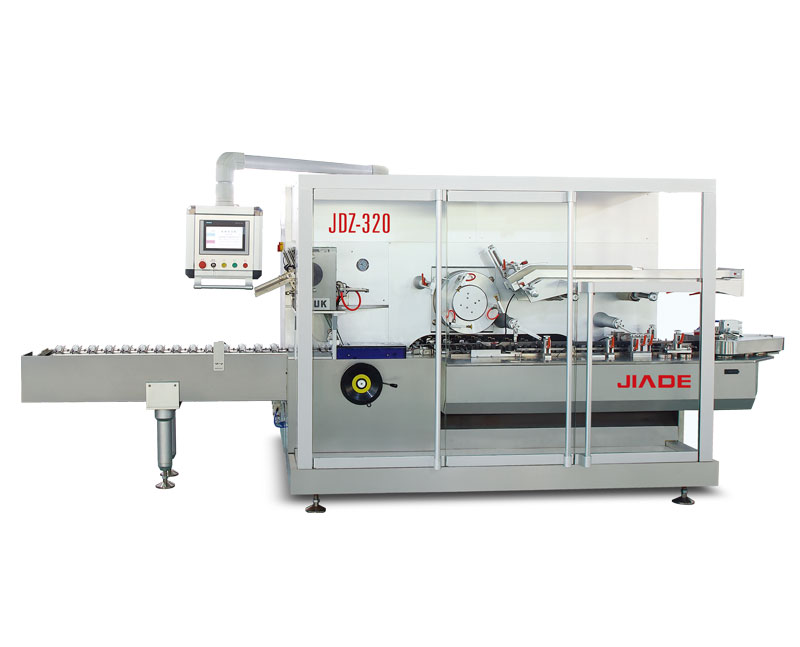

How to Adjust an Automatic Cartoner for Different Product Sizes
A production manager recently described a familiar scene: “Monday morning we’re running small supplement bottles in a compact carton. By Wednesday, we need to switch to a larger blister pack in a completely different box format. The cartoner is down for two hours, the team is frustrated, and we’re losing money every minute.” Changing product sizes on an automatic cartoner is one of the most common and time-consuming tasks in flexible packaging operations. Yet many facilities treat each changeover as a unique event rather than a repeatable process.
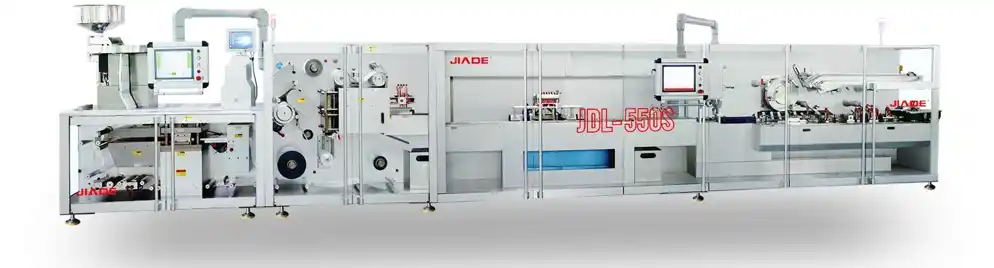
This guide provides a structured approach to adjusting an automatic cartoner for different product sizes, helping you reduce changeover time, minimize errors, and get back to production faster.
Understanding What Actually Changes During a Size Adjustment
Before diving into the step-by-step process, it helps to understand exactly what components of a cartoner are affected when you change product sizes. Different size changes require different levels of adjustment.
| Type of Change | Components Affected | Complexity |
|---|---|---|
| Carton dimensions only (same product, different box size) | Carton magazine, folding rails, transport chains, closing station | Medium |
| Product dimensions only (same carton, different product insert) | Infeed system, product pusher, loading station timing | Medium |
| Both product and carton change (completely new SKU) | All of the above, plus potentially leaflet size and coding position | High |
| Same family, minor variation (e.g., carton height only) | Single adjustment point (often a handwheel) | Low |
The key insight is that not all changeovers are equal. A well-designed automatic cartoner separates these adjustments so you only touch the components that actually need to change.
A 2020 technical guide from the Confederation of British Industry (CBI) on packaging equipment efficiency noted that facilities which standardized their changeover procedures reduced average downtime per format change by 47% within three months. The guide emphasized that “the majority of changeover time is spent searching for tools, verifying adjustments through trial runs, and cleaning—not on the mechanical adjustments themselves.”
Step-by-Step Adjustment Process for a Typical Format Change
The following steps assume you are performing a complete format change—both product and carton size. For smaller adjustments, you may only need a subset of these steps.
Step 1: Preparation and Documentation (Before Stopping the Line)
The most efficient changeover begins before the machine stops. Use a changeover checklist specific to each product family. The checklist should include:
-
Target carton dimensions (width, height, depth/length)
-
Target product dimensions
-
Required change parts (magazine, rails, pushers, infeed guides)
-
Tools needed (ideally none for a modern flexible cartoner)
-
Verification measurements (where to check critical alignments)
Having this information ready reduces guesswork and prevents the “run back to the office for the manual” delays.
Step 2: Safe Shutdown and Cleaning
Stop the machine at the end of a batch. Remove any remaining cartons, products, and leaflets from the infeed and magazine. Clean guide rails, transport chains, and the sealing area. Residual dust or debris from the previous product can cause jams in the new format.
Pro tip: Schedule cleaning as part of every changeover. Attempting to skip cleaning to save time often leads to longer downtime later due to jams and rejects.
Step 3: Adjust the Carton Magazine
The carton magazine holds the flat, folded cartons before they are erected. To adjust for a new carton size:
-
Release the magazine side guides (tool-free levers on modern machines)
-
Slide guides to match the new carton width (typically carton width + 2–3 mm clearance)
-
Adjust the carton stop or gate to match the new carton length
-
Verify that the suction cups (for carton picking) align with the carton surface
-
Tighten all guides
Step 4: Adjust the Transport Chain and Folding Rails
The transport chain moves erected cartons through the loading and closing stations. The folding rails fold the carton flaps.
-
Adjust the chain guide rails to match the new carton width
-
Adjust the rail height for the new carton height (if the machine supports height adjustment)
-
Re-position or replace folding rail sections for the new carton flap configuration
-
Verify that cartons move smoothly without excessive friction
Step 5: Configure the Infeed System for the New Product
The infeed system brings your product (blister packs, bottles, tubes, etc.) to the loading station. This is often the most time-consuming adjustment, but modular designs have simplified it.
-
Adjust product guide rails to match the new product width
-
Adjust or replace the product pusher or loading bucket to match product size
-
If using a servo-driven infeed, input new product dimensions into the HMI
-
Verify that the product aligns correctly with the open carton at the loading point
Step 6: Adjust the Closing Station
The closing station folds the remaining carton flaps and applies glue (for glued cartons) or tucks the flap (for tuck-style cartons).
-
Adjust the pre-folder guides to match the new carton size
-
Adjust the glue nozzle position (if applicable) or tucker mechanism
-
Verify that the final carton emerges properly closed and sealed
Step 7: Verify and Test
Before running a full batch, perform a verification sequence:
-
Manually feed a few cartons through the erection and transport sections to check alignment
-
Run the machine at low speed (20–30% of rated speed) for 20–30 cartons
-
Inspect each carton for proper folding, gluing, and product positioning
-
Adjust as needed, then ramp up to production speed
A 2021 study in the Journal of Packaging Technology and Research found that the verification and testing phase accounts for nearly 40% of total changeover time on machines without digital adjustment aids. Machines with servo-driven, parameter-based adjustments reduced this phase by more than 60% because the initial settings were accurate enough from the HMI inputs.
Traditional vs Modern Adjustment Methods
The adjustment process described above looks very different depending on the age and design of your automatic cartoner.
| Aspect | Traditional Mechanical Cartoner | Modern Servo-Driven Cartoner |
|---|---|---|
| Tool requirement | Wrenches, screwdrivers, alignment gauges, often specialized tools | None or single hex key (most adjustments tool-free) |
| Adjustment method | Manual repositioning of components, trial and error | HMI input of dimensions, servos auto-adjust timing |
| Change parts | Multiple components must be physically replaced | Same components repositioned (rails, guides) |
| Verification | Several slow-speed test runs with manual inspection | First few cartons often correct due to precise calculation |
| Typical changeover time | 60–120 minutes | 15–30 minutes |
| Operator skill required | Highly skilled technician | Trained operator (one person) |
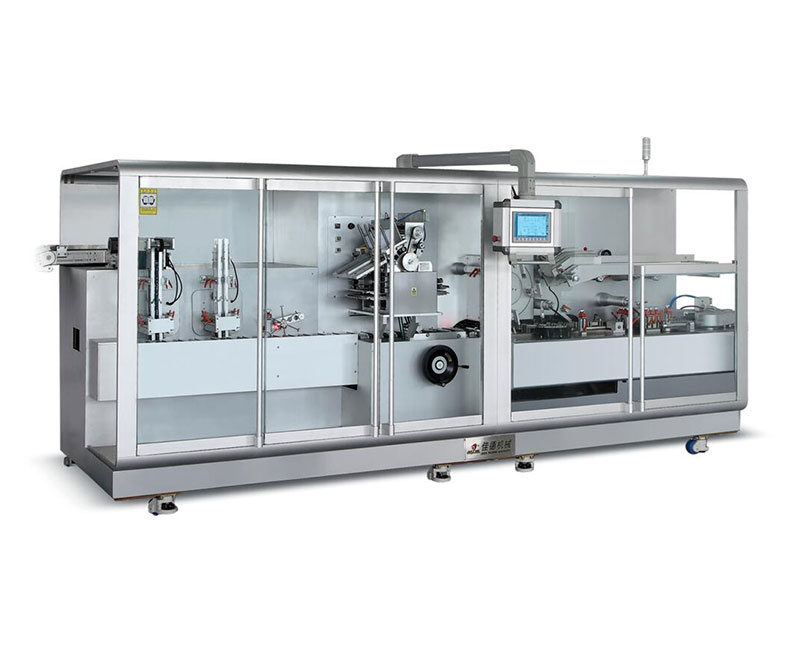
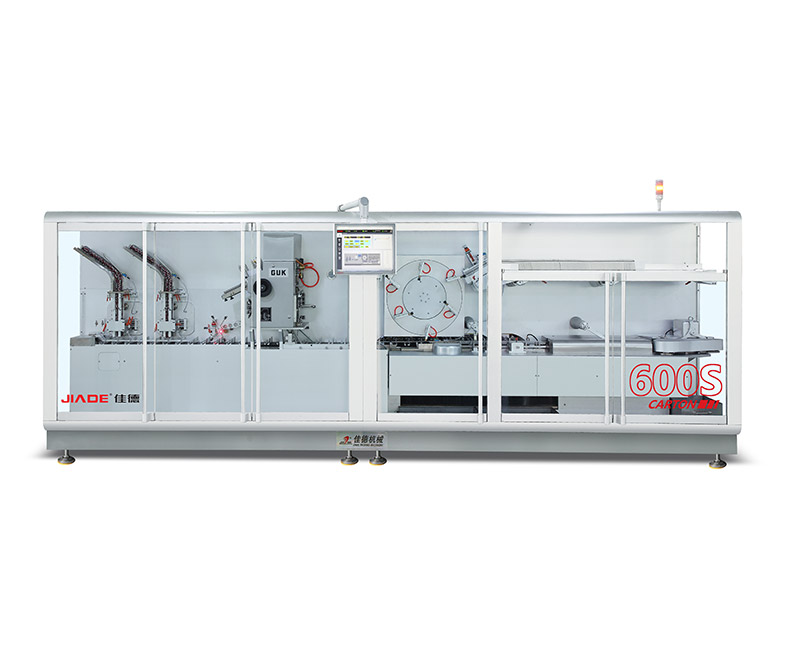
To see how these modern adjustment features are implemented in actual equipment, you can explore the continuous and full-servo automatic cartoning machines designed for rapid, tool-free format changes.
Common Adjustment Challenges and How to Solve Them
Even with a good process, certain challenges regularly arise during cartoner adjustments. Here is how to address them.
Challenge 1: Carton Jams at the Magazine
-
Possible cause: Magazine guides too tight or too loose; suction cup position incorrect
-
Solution: Adjust guides to carton width plus 2–3 mm clearance; verify suction cup contacts the carton squarely
Challenge 2: Cartons Opening Prematurely or Not Staying Open
-
Possible cause: Rail alignment incorrect; vacuum pressure too low for carton pickup
-
Solution: Check rail positions against the carton width; verify vacuum system is clean and sealed
Challenge 3: Product Misalignment at Loading
-
Possible cause: Infeed guide position incorrect; product pusher timing off; product transfer height mismatch
-
Solution: On servo-driven machines, re-enter product dimensions; on mechanical machines, manually adjust pusher timing relative to carton position
Challenge 4: Flaps Not Closing Properly
-
Possible cause: Folding rail positions incorrect; glue application timing or volume wrong
-
Solution: Verify rail alignment to carton flap path; clean glue nozzles and check pressure
Challenge 5: Changeover Takes Longer Than Expected
-
Possible cause: Missing or incomplete changeover checklist; tools not organized; training gaps
-
Solution: Document each changeover for that specific product pair; create a visual guide; assign one operator to lead changeovers
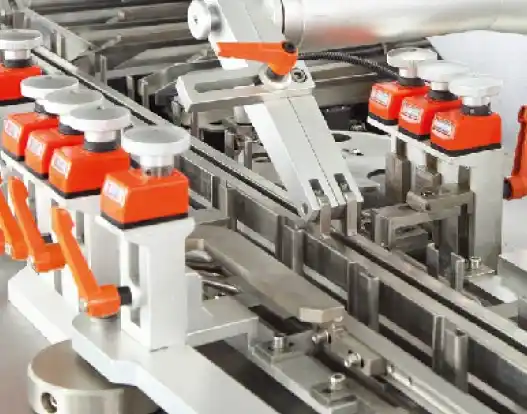
Reducing Adjustment Time Through Better Design and Practice
Reducing changeover time is a combination of equipment capability and operator practice. Here are three proven strategies.
Strategy 1: Implement SMED (Single-Minute Exchange of Die) Principles
Originally developed for manufacturing, SMED applies directly to cartoner changeovers:
-
Separate internal setup (tasks that require the machine to be stopped) from external setup (tasks that can be done while the machine is running)
-
Convert internal tasks to external where possible (e.g., prepare next batch’s change parts during the current run)
-
Streamline remaining internal tasks (tool-free adjustments, standardized positions)
Strategy 2: Use Digital Position Memories
On modern servo-driven cartoners, you can save complete setup profiles for each product. When you need to return to a previously run format, you simply select the profile from the HMI. The servos automatically move to the saved positions. This eliminates the need for most mechanical adjustments on repeat changeovers.
Strategy 3: Standardize Your Carton and Product Families
Where possible, work with your packaging suppliers to reduce the dimensional variation across your product line. For example, using the same carton width across multiple products, even if height and depth vary, can dramatically simplify changeovers. Many pharmaceutical companies have adopted this approach for their secondary packaging.
For facilities looking to build a complete flexible line where adjustment time is minimized across all equipment—from blister machine to cartoner to bundler—reviewing one-stop customized packaging solutions can provide a holistic view of how integrated systems share adjustment data.
Real-World Adjustment Scenarios
Understanding how different facilities handle adjustments can help you refine your own process.
Scenario A: Pharmaceutical Company with High SKU Count
-
Challenge: 20+ different blister and carton combinations, batch sizes as low as 3,000 units
-
Solution: Invested in full-servo cartoners with recipe storage. Changeover time reduced from 75 minutes to under 20 minutes. Now runs 5–6 batches per shift instead of 2–3.
-
Key lesson: Digital recipe storage was the single biggest time-saver for repeat changeovers.
Scenario B: Contract Packager with Extreme Product Variety
-
Challenge: Switches between blisters, bottles, and sachets weekly—not just carton sizes
-
Solution: Selected modular infeed system with quick-change product guides. Infeed changeover now takes 10 minutes instead of 45 minutes.
-
Key lesson: Evaluate the infeed as carefully as the carton transport section.
Scenario C: Nutraceutical Brand with Seasonal Peaks
-
Challenge: During peak season, runs the same product for weeks; during off-season, frequent small batches
-
Solution: Uses the same cartoner year-round. During high-volume periods, treats it as a dedicated machine. During flexible periods, activates full changeover capabilities.
-
Key lesson: A flexible machine can operate as a dedicated machine when needed, but a dedicated machine cannot operate flexibly.
For specialized pharmaceutical applications where unique carton formats (slanted boxes, hexagonal boxes) add complexity to adjustments, exploring customized solutions for special carton formats may provide additional guidance.
Next Steps: From Adjustment Process to Operator Training
By now, you should have a clear understanding of what is involved in adjusting an automatic cartoner for different product sizes—from preparation to verification. You also know which machine design features (tool-free adjustment, servo synchronization, digital position memory) make the process faster and more reliable.
The next logical step is to translate this knowledge into an effective training program for your operators. Even the most flexible machine will not deliver fast changeovers if operators are not trained on a standardized process. Consider these actions:
-
Create a changeover checklist for each product family
-
Document the HMI settings for each format as a saved recipe
-
Run timed changeover drills quarterly to identify bottlenecks
-
Involve operators in equipment selection—they will notice design flaws that engineers miss
Once you have established your changeover process requirements, you can compare the full range of cartoning and blister packaging equipment to see which series offer the adjustment features that align with your product mix. For facilities considering a complete line overhaul, exploring integrated monoblock solutions may reveal how combining blister and cartoning into a single chassis eliminates transfer adjustments.
Related Reading
-
How to choose an automatic cartoner for small batches and quick changeover
-
How to evaluate the true cost of downtime in packaging operations
-
Designing a blister-to-carton line that minimizes adjustment complexity
-
Understanding GMP requirements for cartoner changeover validation
-
Building an operator training program for fast format changeovers