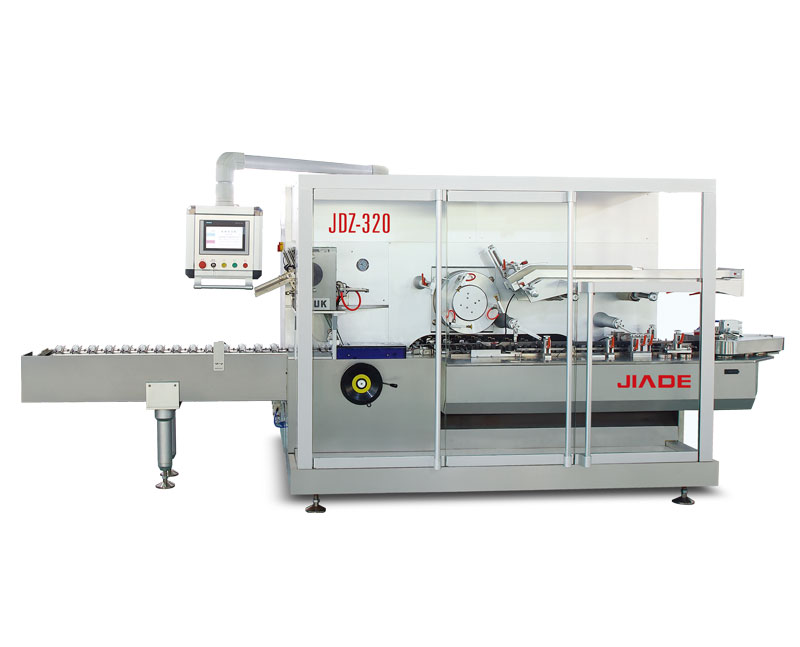

How to Choose an Automatic Cartoning Machine for Your Line
A packaging line supervisor we spoke with recently put it bluntly: “We bought a cartoner that hit the rated speed on paper, but in real production it became the bottleneck of the entire line.” His frustration isn’t unique. Every year, food, pharma and personal care manufacturers invest in cartoning equipment only to find that a mismatch in format flexibility, floor space or integration logic erodes their ROI within the first six months.
If you’re looking for a way to bring a new carton-packing system into your line without those regrets, this article will walk you through the half-dozen factors that matter most in daily operation. We’ll skip the spec-sheet jargon and focus on what experienced packaging engineers actually check.
1. Start with the carton style – not with the speed number
Before discussing cycles per minute, take a close look at the paperboard blank you plan to run. A straight tuck, reverse tuck, or glue-sealed sleeve each requires a different set of forming and closing stations. A lock-bottom carton for a heavy glass jar demands a completely different opening mechanism than a simple friction-fit sleeve for a lightweight blister pack.
One practical tip: Collect carton samples from at least three different production batches of your converter. Paperboard calliper, crease depth and humidity history can shift slightly between lots. If a cartoning cell can’t handle that normal variation without frequent jams, your line will accumulate significant downtime. ISO 11093-4 and similar test standards for board stiffness give you a solid reference, but nothing replaces actual run samples on the machine you plan to buy.
2. Match the motion profile to your real throughput – not theoretical peak speed
Most packaging engineers distinguish two broad categories: intermittent and continuous motion. An intermittent cartoner stops the carton at each station for forming, loading and closing. It’s mechanically simpler and works well up to roughly 100–120 cartons per minute, depending on carton size. Beyond that point, acceleration forces start fighting against product stability.
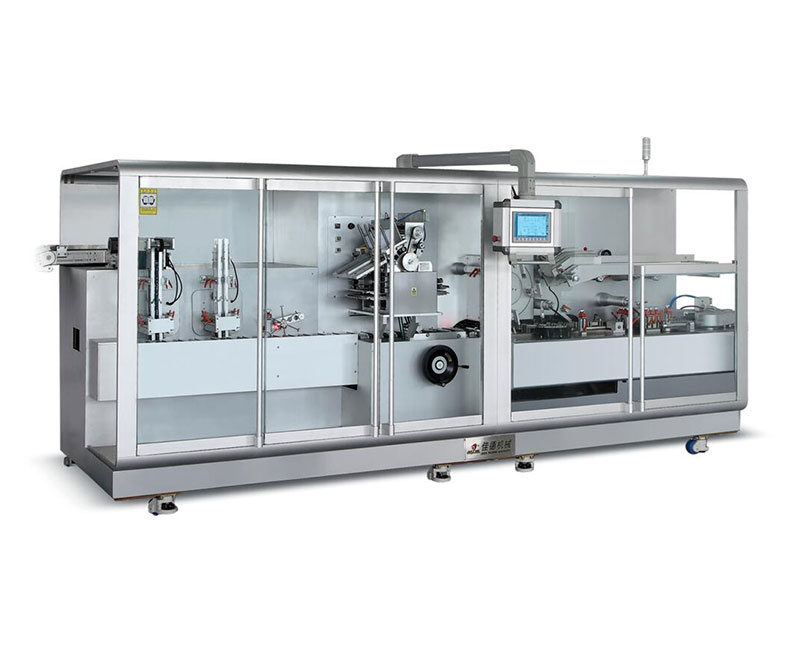
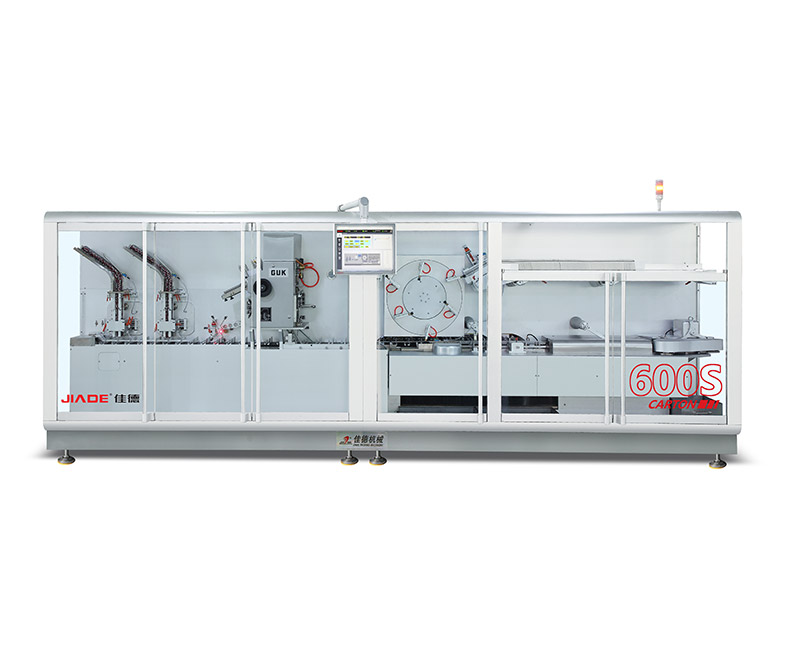
Continuous motion systems keep the carton in uninterrupted flow while tooling follows along on a rotary or track-based chain. This significantly reduces jerking and allows speeds well above 200 cartons per minute, even with products that require gentle handling. If your forecast shows volumes creeping past that 120-cpm threshold in the next three years, it may be time to look at continuous motion cartoning equipment (link to product page). Keep in mind that “speed” is only meaningful when you also define carton size, product stability and manual intervention frequency. A system that delivers 180 ppm on paper but loses 15% of its time to jam clearance is not truly faster.
3. Floor space and line integration are a cost factor, not an afterthought
Cartoning stations don’t sit in a vacuum. They need to mate with upstream filling or weighing systems and downstream case packers or palletizers. In brownfield projects, especially, the machine’s footprint and the direction of carton flow can be the difference between a straightforward installation and a costly facility re-layout.
Where space is tight, many lines benefit from compact continuous-motion solutions (link to product page) that nest the product infeed and carton magazine in a smaller footprint. Also check if the supplier offers multiple infeed configurations – for example, a servo-driven bucket that can accept product from a side-belt conveyor or from a robotic pick-and-place cell. Plan for future integration even if you don’t need it today; adding a vision inspection module or a barcode labeller becomes much easier if the machine control architecture supports it from the start.
4. Compliance isn’t only a pharma topic
If your cartons carry pharmaceuticals, cosmetics or foods with direct skin contact, you’re dealing with regulatory demands that extend far into the machinery design. Pharmaceutical packaging lines often require documentation that proves the cartoning step does not compromise product quality or traceability. Look for machinery that follows cGMP principles: sloped surfaces to avoid dust accumulation, quick-release guarding for cleaning, and 21 CFR Part 11-compliant audit trail capabilities in the HMI. For food contact, European Regulation 1935/2004 and FDA 21 CFR compliance on material certificates are baseline expectations.
When auditing a machine builder, request a factory acceptance test that includes a challenge with a “worst-case” carton batch – board at the upper limit of thickness, printed with high-gloss varnish, in high humidity. For production in regulated environments, cartoning systems built for cGMP environments (link to product page) give you a head start on validation because the risk assessment documentation is already aligned with ISPE baseline guides.
5. Changeover time will define your agility, not just your output
A line that runs a single SKU for months can afford a 45-minute changeover. But the trend toward shorter runs and late-stage customisation means many plants now change formats several times a day. Servo-driven adjustments with recipe management can cut a changeover from 30 minutes to under 10, and in some cases to under 5 minutes with features like automatically adjusting carton guide rails and product pushers from the HMI.
During an on-site visit to a contract packager last year, we watched an operator switch from a 100ml bottle carton to a 200ml flat carton in six minutes flat, simply by calling up a stored recipe. The line restarted with the first good carton, which eliminated the trial-and-error start-up scrap they used to accept as “normal.” That’s a real-world productivity gain that rarely shows up in a specification sheet but has a direct impact on OEE.
6. Look beyond the purchase price
Service support, spare parts availability and the manufacturer’s willingness to conduct a line audit before quoting often tell you more about the long-term relationship than the initial price tag. Ask hard questions: How quickly can you ship a replacement forming die if ours gets damaged? Do you offer remote diagnostic support that complies with our IT security policy? Is training included for our maintenance crew?
A lower upfront cost that comes with a six-week lead time on wear parts will cost far more over a 10-year lifespan than a machine that is slightly more expensive but supported by regional service hubs. When calculating the total cost of ownership, factor in energy consumption, compressed air usage and expected life of high-wear components like carton feeders and tuck-in blades.
Bringing it together: the value of structured selection
None of these six factors stands alone. A high-speed continuous motion architecture that doesn’t match your carton style will still jam. A brilliantly compact footprint that can’t accommodate your clean-down procedure will still fail a regulatory audit. And a superbly fast changeover that depends on a single, overburdened technician will still cause downtime. The winning combination almost always emerges from a methodical evaluation that starts with the product, moves to the process, and only then looks at machinery specifications.
If you’d prefer to lean on someone who’s already guided dozens of packaging teams through this process, take a look at JIADE’s approach to cartoning platforms. Their engineering team routinely carries out line audits, matches carton samples with proven tooling geometries, and builds continuous-motion machines that have handled everything from delicate medical devices to heavy automotive components. Speak with a cartoning specialist (link to product page) to review your application – often, a 30-minute call can surface a constraint you hadn’t yet noticed, and it costs you nothing.
Disclaimer: This article provides general guidance and does not replace a professional line audit. Packaging decisions should always be validated with the specific product, carton material and operating environment.