
How to Stop Product Damage Caused by Your Auto Cartoner
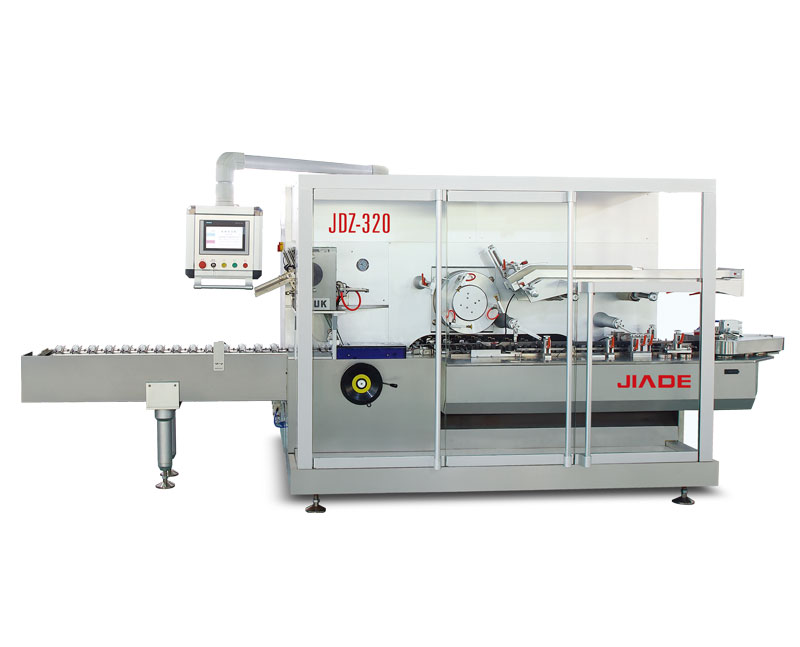
A quality manager recently described a frustrating and expensive problem: “Our automatic cartoner is damaging about 2% of our blister packs. The blisters look fine coming out of the blister machine. But after cartoning, the foil is scratched, some cavities are dented, and occasionally a tablet is crushed. We’ve tried slowing the machine down. We’ve changed operators. Nothing fixes it consistently.” Product damage caused by automatic cartoners is more common than many manufacturers admit. The damage may be visible—scratches, dents, crushed corners—or hidden, such as a cracked tablet inside an intact blister. Either way, it costs money in rejected product, customer complaints, and slowed production.
This guide walks you through the most common causes of product damage in automatic cartoning machines and provides a systematic approach to diagnosing and eliminating each one.
Understanding How Product Damage Occurs in a Cartoner
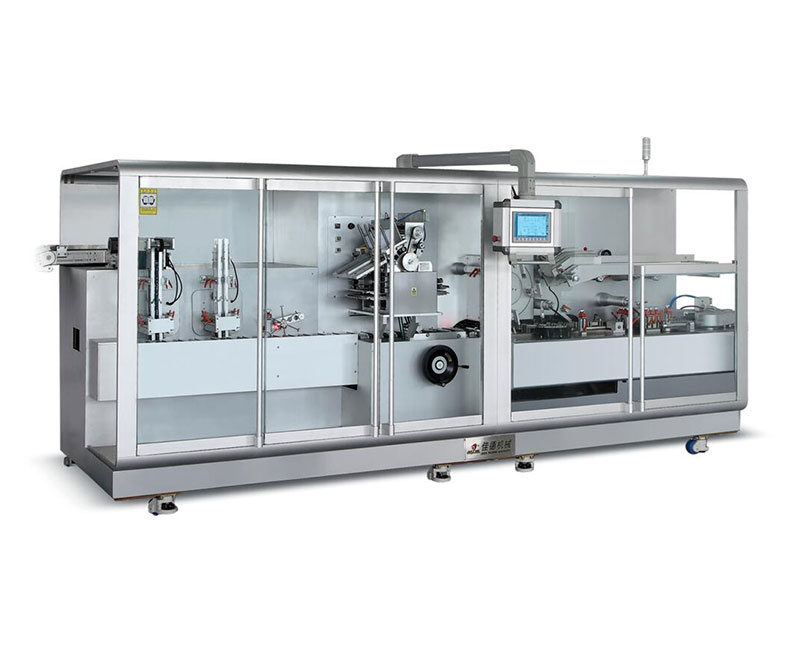
Before fixing damage, it helps to understand the mechanisms that cause it. An automatic cartoner handles products at multiple points in the process. Damage can occur at any of these stages.
| Stage | Product Movement | Potential Damage Type |
|---|---|---|
| Product infeed | Product moves from upstream equipment onto cartoner infeed conveyor | Scratching, scuffing from guides |
| Product accumulation/buffering | Products group together before loading | Collision damage, denting from product-to-product contact |
| Product transfer to loader | Product moves from infeed to loading station | Jamming, crushing if timing is off |
| Product insertion into carton | Pusher pushes product into open carton | Edge damage, surface scratches from carton flaps |
| Carton closing and discharge | Filled carton moves through folding and out of machine | Crushing if rails are too tight, impact at discharge |
A 2021 industry survey conducted by the Packaging Machinery Manufacturers Institute (PMMI) found that among pharmaceutical and nutraceutical packagers, product damage during cartoning was reported as a “significant or occasional problem” by 43% of respondents. The most commonly cited damage types were scratches on printed blisters (28%), dented carton corners (22%), and damage to product leaflets during insertion (18%).
The good news is that most damage is preventable through systematic diagnosis and adjustment—without replacing the machine.
Five Common Damage Types and Their Root Causes
Use this diagnostic table to match the damage you are seeing with the most likely root cause.
| Damage Observed | Most Likely Cause | Where to Inspect |
|---|---|---|
| Scratches or scuff marks on product surface | Abrasive guide surfaces; debris on conveyors; misaligned infeed guides | Infeed guides, transfer plates, conveyor belts |
| Dents or crushed corners on product | Excessive accumulation pressure; product-to-product impact at buffer zones | Accumulation table settings; infeed timing |
| Blister foil torn or punctured | Sharp edge on carton flap; misaligned product pusher; carton flap folding before product fully inserted | Product pusher face; carton flap pre-folder; loading station alignment |
| Product misaligned inside carton (visible through window) | Product shifted during insertion or transport; loading station timing off | Product pusher speed; carton transport synchronization |
| Carton torn at flap or seal area | Folding rails too tight; glue pressure too high (causing sticking); carton quality issue | Folding rails at closing station; glue nozzle position |
The user benefit summarized: Matching the symptom to the cause narrows your investigation dramatically. You avoid the frustration of adjusting random components hoping something works.
The Five-Step Diagnostic Process
When product damage appears, follow this systematic process rather than guessing.
Step 1: Isolate the Damage Location
Run the machine at low speed (20–30% of rated speed) with empty cartons but real product. Watch the product through every stage:
-
Does the product look damaged before entering the cartoner? (If yes, the issue is upstream.)
-
Does damage first appear at the infeed? During buffering? At loading? At closing?
Mark the exact station where damage occurs. Use a piece of tape on the machine frame if needed.
Step 2: Check for Debris and Guide Condition
Before making any mechanical adjustments, clean the machine thoroughly. Pay special attention to:
-
Infeed guide rails (built-up residue creates abrasive surfaces)
-
Transfer plates (burrs or scratches transfer to product)
-
Conveyor belts (embedded debris acts like sandpaper)
-
Product pusher face (adhesive residue can stick to and tear product surfaces)
Many facilities have solved “product scratching” problems simply by cleaning or replacing worn guide materials—not by complex mechanical adjustments.
Step 3: Verify Timing Synchronization
On automatic cartoners, product damage often occurs when the product pusher and carton transport are not perfectly synchronized. The product should enter the carton smoothly, with the carton fully opened and stationary at the moment of insertion.
-
If the pusher moves before the carton is fully opened, the product will strike the carton flap
-
If the carton closes before the product is fully inserted, the carton flaps will pinch the product
-
If the pusher retracts too slowly, the product may be pulled back out of the carton
On modern servo-driven cartoners, timing is adjusted through the HMI by entering product dimensions. On older mechanical machines, timing adjustments require mechanical repositioning of cams or sensors.
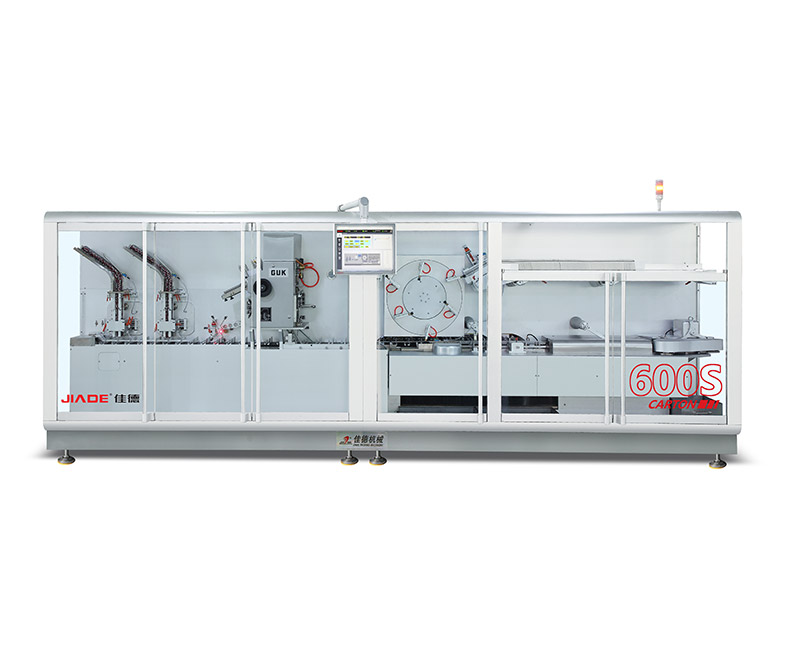
To understand how servo synchronization prevents timing-related damage, you can explore the continuous and full-servo automatic cartoning machine features that enable precise motion control.
Step 4: Check Product-to-Carton Fit
Even a perfectly timed machine will damage products if the fit between product and carton is incorrect.
| Fit Issue | Resulting Damage |
|---|---|
| Product too tight in carton (minimal clearance) | Scratches, insertion jams, carton bulging |
| Product too loose in carton | Product shifts during transport may tilt and catch on flaps |
| Product height mismatched to carton | Flaps may not close flat; product crushed during closing |
The recommended clearance between product and carton interior varies by product fragility, but a general guideline is 1–3 mm on each side for rigid products, and slightly more for flexible products.
If you are seeing damage consistently on a specific product family, review the customized solutions for special product formats to see if alternative infeed or loading designs might help.
Step 5: Test with Reduced Accumulation Pressure
Accumulation conveyors and buffer zones allow products to group before cartoning. But excessive accumulation pressure—where products are pushed against each other—is a common cause of denting and surface damage.
-
Reduce the accumulation zone length if possible
-
Lower the conveyor speed differential (the speed difference between infeed and cartoner)
-
Consider a “zero-pressure” accumulation design if product is extremely sensitive
Case Study: Diagnosing and Solving a Blister Pack Scratching Problem
A contract pharmaceutical packager was running aluminum-aluminum blister packs through a horizontal automatic cartoner. About 3% of blisters showed fine scratches on the foil surface. The scratches were cosmetic but unacceptable to their brand-name client.
Step 1 (Isolate): Watching the machine at low speed revealed scratches appeared at the loading station, not before.
Step 2 (Clean): The product pusher face had a small burr—a raised edge of metal—from previous damage. This burr was scratching the foil on every push.
Step 3 (Timing): Timing was correct; product entered smoothly.
Step 4 (Fit): Clearance was adequate.
Solution: The pusher face was disassembled, deburred with fine sandpaper, and polished. A thin, smooth-faced nylon pad was added to the pusher face as a protective layer. Scratch rate dropped to below 0.2%.
Cost to implement: Less than $50 in materials and two hours of technician time. The client avoided replacing a $10,000 pusher assembly.
Case Study: Solving Carton Crushing at the Closing Station
A nutraceutical company was experiencing crushed corners on cartons after the closing station. The damage appeared intermittently—some cartons perfect, others with visibly flattened corners.
Step 1 (Isolate): Damage occurred at the folding rail section, after product loading.
Step 2 (Clean): Rails were clean but showed uneven wear patterns.
Step 3 (Timing): Timing was correct.
Step 4 (Fit): Carton-to-product fit was appropriate.
Further investigation: The folding rails were adjustable for different carton widths. Operators had been setting the rails to the minimum width to ensure tight folds. But at high speed, the tolerance was too tight. Cartons that were slightly oversized (within normal manufacturing variation) were being compressed.
Solution: Operators were trained to set folding rail clearance to carton width plus 2 mm, measured with a feeler gauge. Crushed corners dropped by 90%.
Key lesson: “Tighter” is not always better. Proper clearance—not minimum clearance—prevents damage.
When Product Fragility Requires Special Handling
Some products are inherently more fragile than others. For these applications, standard cartoner designs may need modification.
| Fragile Product Type | Standard Cartoner Risk | Special Handling Solution |
|---|---|---|
| Soft gelatin capsules in blisters | Foil puncture from sharp carton flaps | Rounded or softened flap edges; slower loading speed |
| Pre-filled syringes | Breakage during product push | Custom product pocket; servo-controlled gentle acceleration |
| Glass bottles | Chipping at bottle-to-bottle contact | Zero-pressure accumulation; individual bottle spacing |
| Diagnostic test strips | Bending or creasing | Vacuum-assisted infeed; reduced accumulation pressure |
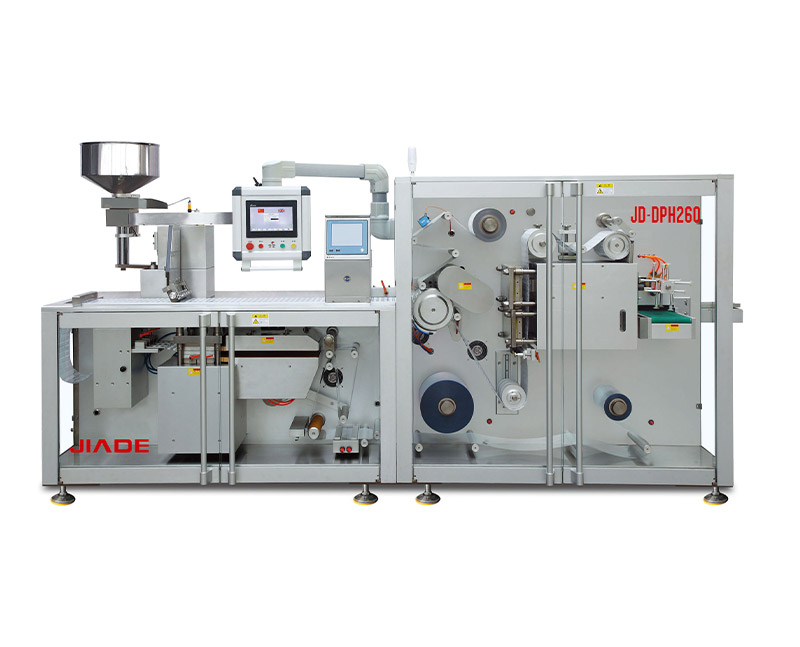
For facilities packaging products in these categories, exploring integrated blister and cartoning solutions with product-specific infeed designs may be more effective than modifying a standard cartoner.
In extreme cases, customized solutions for unique product handling may be required. This can include specialized product pockets, servo-controlled gentler acceleration profiles, or reduced-speed sections at critical transfer points.