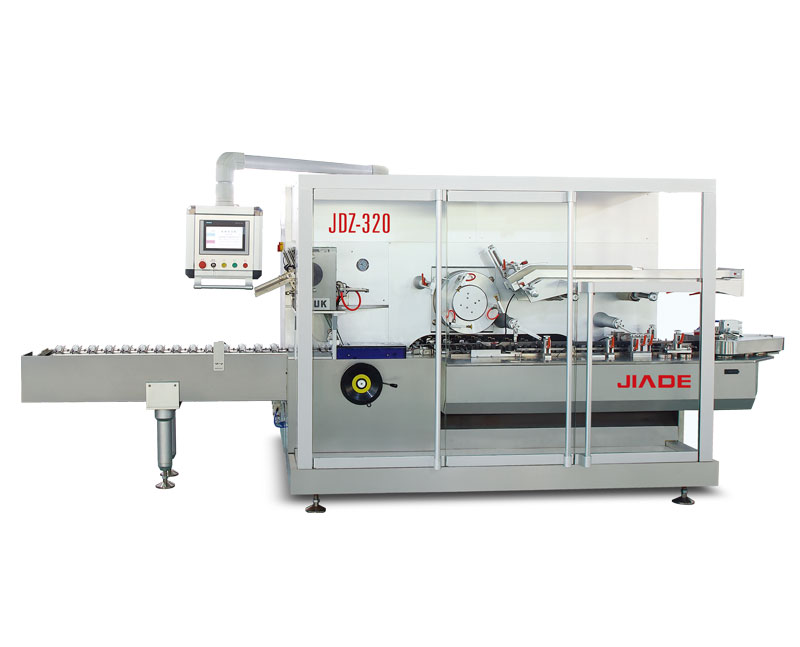

Automatic Cartoner vs Case Packer: What's the Real Difference?
A packaging engineer recently asked a question that reflects a common point of confusion: “We’re planning a new line. Some suppliers are talking about cartoners. Others mention case packers. Aren’t they both just putting products into boxes? Do we need both?” On the surface, an automatic cartoner and a case packer perform similar functions—they take a product and place it into a container. But the scale, purpose, and placement of these two machines are fundamentally different. Confusing them leads to under-specified lines, wasted floor space, and inefficient material flow.
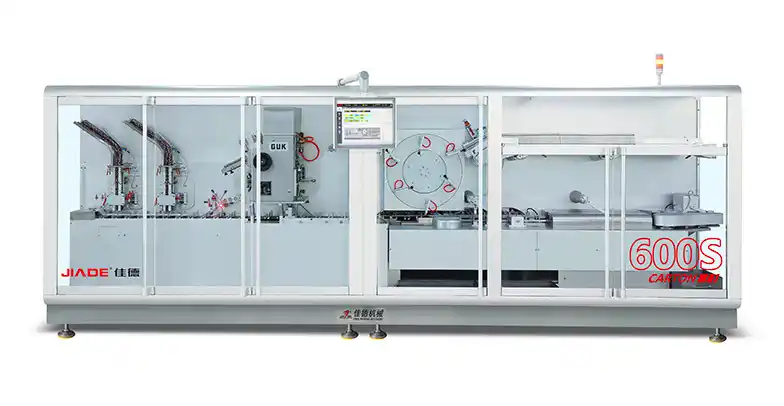
This guide explains the real difference between an automatic cartoner and a case packer, including when you need one, the other, or both.
The Fundamental Distinction: Primary vs Tertiary Packaging
To understand the difference between a cartoner and a case packer, you first need to understand the three levels of packaging.
| Packaging Level | Purpose | Typical Container | Typical Machine |
|---|---|---|---|
| Primary packaging | Direct product contact; protection and preservation | Blister pack, bottle, pouch, sachet | Blister machine, filler, vertical form fill seal |
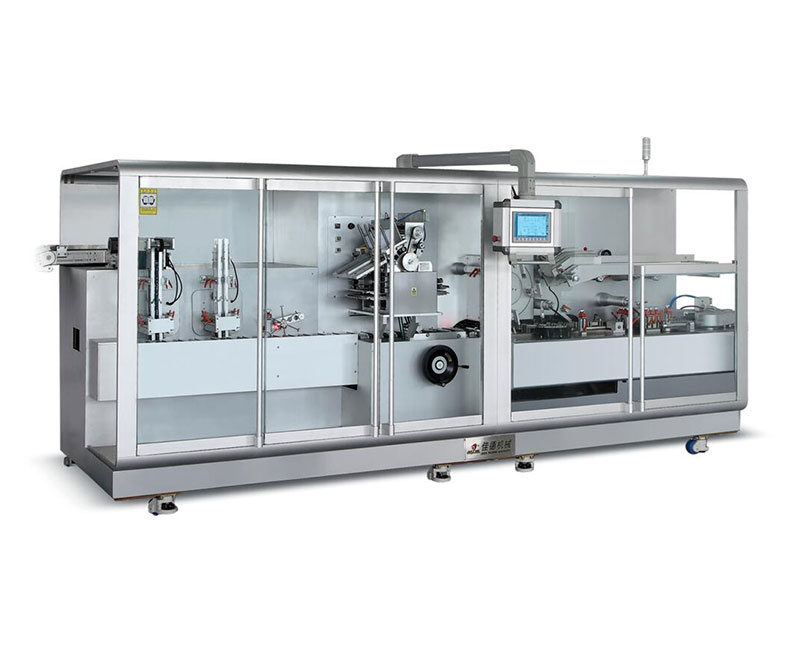
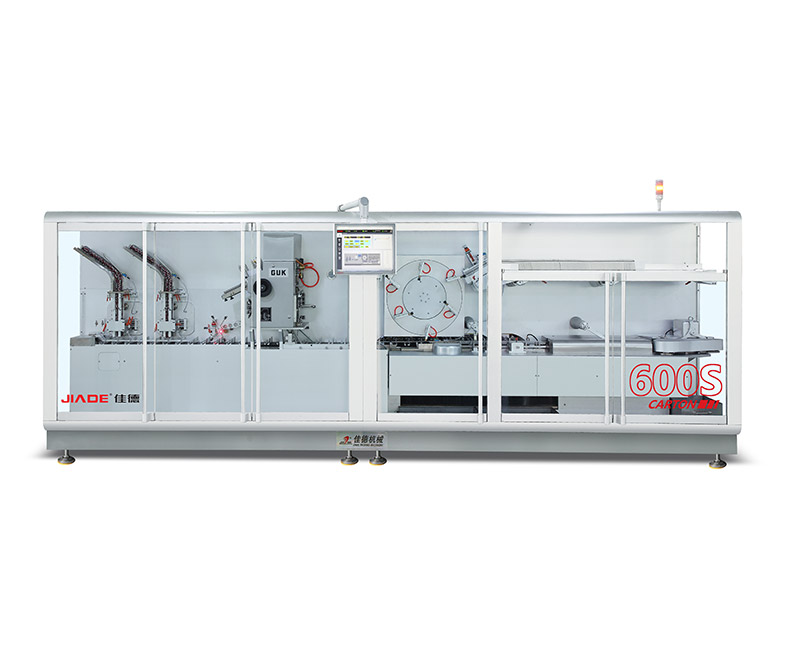
| Secondary packaging | Groups primary packages; retail display; information | Carton, box, display tray | Automatic cartoner |
| Tertiary packaging | Groups secondary packages for shipping and distribution | Corrugated case, shipping carton, stretch-wrapped pallet | Case packer, palletizer |
The key insight: An automatic cartoner puts primary packages (blisters, bottles, tubes) into retail-ready cartons. A case packer puts those cartons (or sometimes primary packages directly) into shipping cases for distribution.
The two machines operate at different levels of the packaging hierarchy. They are not alternatives to each other—they are typically sequential. Your product goes through the cartoner before it reaches the case packer.
According to packaging industry terminology standards published by the American Society for Testing and Materials (ASTM) , specifically ASTM D996, secondary packaging is defined as “packaging that contains a primary package or groups of primary packages,” while tertiary packaging is “packaging designed to group secondary packages for handling, shipping, and distribution.” This distinction is consistent across global packaging standards.
Side-by-Side Comparison: Automatic Cartoner vs Case Packer
| Feature | Automatic Cartoner | Case Packer |
|---|---|---|
| Input (what goes in) | Primary packages (blisters, bottles, tubes, sachets, pouches) plus flat carton blanks | Secondary packages (filled cartons) or sometimes primary packages directly |
| Output (what comes out) | Erected, loaded, and closed cartons (retail-ready) | Loaded corrugated cases (shipping-ready), often with case erecting, sealing, and labeling |
| Typical container size | Small to medium (e.g., 50mm–200mm carton length) | Large (e.g., 200mm–600mm case length) |
| Typical speed | 100–600+ cartons per minute | 10–40 cases per minute |
| Primary function | Product protection, retail presentation, information display (barcode, lot number, expiry) | Product protection during shipping, pallet stacking, efficient transport |
| Material handled | Paperboard cartons (thin, printed, often with flaps) | Corrugated cases (thick, rigid, can be RSC or other styles) |
| Integration position | After primary packaging; before case packing | After cartoning (if both are used); at end of line |
| Operator skill level | Higher (format changes, timing adjustments, product handling) | Moderate (case magazine loading, case sealer adjustment) |
The user benefit summarized: If you sell products to retailers or directly to consumers, you need a cartoner to create the individual retail unit. If you ship those retail units in bulk to distributors or warehouses, you need a case packer to group them into shipping cases. Most mid-to-large volume operations need both—but they serve completely different purposes.
Where Confusion Arises: When a Machine Blurs the Line
Some packaging equipment blurs the distinction between cartoner and case packer. Understanding these exceptions helps clarify the general rule.
Exception 1: The “Case Packer” That Packs Primary Packages Directly
Many case packers can accept primary packages (e.g., bottles or pouches) directly, without intermediate cartoning. This is common in beverage and food service industries where retail cartons are not required. In this scenario, the machine is still a case packer—it just skips the cartoning step.
Exception 2: The “Retail-Ready Case Packer”
Some modern case packers are designed to pack products into cases that double as retail displays (e.g., shelf-ready cases with perforated tear-away fronts). In this configuration, the “case” serves both shipping and retail functions. The distinction between secondary and tertiary packaging blurs, but the machine is still a case packer by function.
Exception 3: Carton Bundling as a Middle Step
Some lines use a carton bundling machine to group individual cartons into a film-wrapped bundle before case packing. This is neither cartoning nor case packing—it is an intermediate grouping step that reduces the number of units the case packer must handle.
Practical Application: Designing a Line with Both Machines
If your operation requires both a cartoner and a case packer, understanding their relationship helps you design an efficient line.
Typical Line Layout (Flow Direction)
Primary packaging (e.g., blister machine) → Automatic cartoner → Optional: checkweigher, bundler → Case packer → Case sealer → Palletizer
Key Design Considerations
| Consideration | Why It Matters |
|---|---|
| Speed matching | Cartoner output (e.g., 400 cartons/min) is much faster than case packer input (e.g., 15 cases/min holding 20 cartons each = 300 cartons/min). A buffer or accumulator between machines prevents starving or jamming. |
| Carton-to-case orientation | Case packers require cartons to be oriented correctly (e.g., all flaps facing the same direction). The cartoner discharge must present cartons consistently. |
| Changeover coordination | If both machines change format, coordinate the changeover timing. Changing the cartoner but not the case packer (or vice versa) creates mismatches. |
| Case magazine location | Case packers require space for a magazine of flat corrugated blanks (similar to a cartoner’s carton magazine but larger). Plan floor space accordingly. |
For facilities where space is limited, exploring monoblock configurations for space-constrained lines can help you understand how integration reduces footprint—though monoblocks typically combine blister and cartoning, not cartoning and case packing.